Everything You Need to Know About Renting Property, Tenants Guide, Property to Rent, Renting in South West London
Welcome to the Tenant Hub
Topics:
Renting a Property
Tenant Guide
Renting in England
First Time Tenant
Tenant Rights
Renters Rights Act
Tenancy Agreement
Deposit Protection
Moving Into a Rental Property
Renting Made Simple
Whether you’re renting your first home or have rented before, our Tenant Hub has been designed to guide you through every stage of your tenancy.
From arranging a viewing and submitting an application to moving in, reporting repairs and getting your deposit back, we’ll explain everything in plain English so you know exactly what to expect.
At Yes Properties, we believe informed tenants make happier tenancies.
We’re here to help before, during and after your tenancy.
Our team will guide you through each stage of the renting process and answer any questions you may have.
Honest Advice
We explain everything clearly.
No confusing legal jargon.
No hidden surprises.
Just straightforward advice you can rely on.
Easy Communication
Need assistance?
Our friendly team is only a phone call or email away.
We’ll always try to respond promptly and keep you updated.
Renting Made Simple
We’ve created one of the UK’s most comprehensive Tenant Hubs so you can find answers whenever you need them.
Your Renting Journey
Follow your complete renting journey with Yes Properties—from finding your ideal home and signing your tenancy agreement to moving in, enjoying your tenancy and receiving your deposit back at the end of your tenancy.
New to Renting?
Renting a property can seem overwhelming, particularly if it’s your first time.
Most estate agents simply advertise available properties.
We wanted to do more.
Our aim is to create a trusted resource where tenants can find reliable, practical and up-to-date information about renting in England.
As legislation changes and new guidance becomes available, we’ll continue updating this hub to help you stay informed throughout your tenancy.
Whether you’re searching for your next home or you’re already renting through Yes Properties, we’re here to support you every step of the way.
Tenant Hub
Tenant Download Centre & Essential Resources
One of the most important parts of renting a property is understanding your rights, responsibilities and the documents you’ll receive throughout your tenancy.
To make things easier, we’ve created a central resource where you can access useful guides, checklists and official government information—all in one place.
Whether you’re preparing to move into your first rental property or you’re already a tenant, these resources are designed to help you stay informed.
Tenant Download Centre
Everything You Need in One Place
We’ve organised our resources into simple categories so you can quickly find what you’re looking for.
As legislation changes and new guidance becomes available, we’ll continue updating this resource centre.
Official Government Guidance
These documents are published by the UK Government and explain your legal rights and responsibilities as a tenant.
Where possible, we link directly to the official GOV.UK version so you always have the latest information.
Important: Government guidance is updated from time to time. We recommend downloading documents directly from the official GOV.UK website to ensure you have the latest version.
YES Properties Download Library
We’ve also created a range of practical guides and checklists to make renting easier.
These have been written in plain English and are designed to answer the questions tenants ask us most often.
Downloads include:
✔ Moving Home Checklist
✔ First-Time Tenant Guide
✔ Moving Day Checklist
✔ Utility Transfer Checklist
✔ Council Tax Checklist
✔ Broadband Setup Guide
✔ Inventory Checklist
✔ Cleaning Checklist
✔ End of Tenancy Guide
✔ Deposit Return Guide
✔ Property Care Guide
✔ Emergency Contact Sheet
These guides are free to download and use.
Before You Move In
Moving into a new home is exciting, but it’s easy to forget important tasks.
Our moving-in resources help you remember things such as:
Taking meter readings.
Setting up utility accounts.
Updating your address.
Registering for Council Tax.
Arranging broadband.
Checking smoke alarms.
Reviewing the inventory.
Testing appliances.
Completing these simple checks at the beginning of your tenancy can help prevent misunderstandings later.
During Your Tenancy
We’ve created practical guides covering everyday situations, including:
Reporting repairs.
Looking after the property.
Condensation and mould prevention.
Waste collection.
Looking after appliances.
Garden maintenance (where applicable).
Keeping your home secure.
Emergency situations.
Our aim is to help tenants enjoy a safe, comfortable home throughout their tenancy.
Preparing to Move Out
Moving out can be just as important as moving in.
Our check-out resources explain:
Giving notice.
Cleaning expectations.
Returning keys.
Final meter readings.
Deposit returns.
Fair wear and tear.
Ending utility accounts.
Updating your address.
Preparing properly can make the check-out process much smoother for everyone involved.
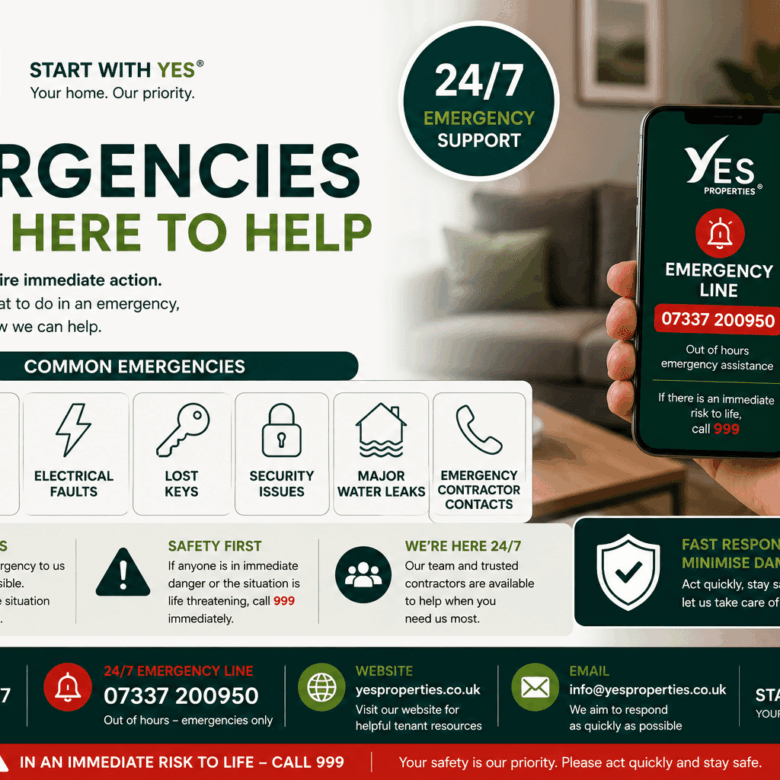
Emergency Information
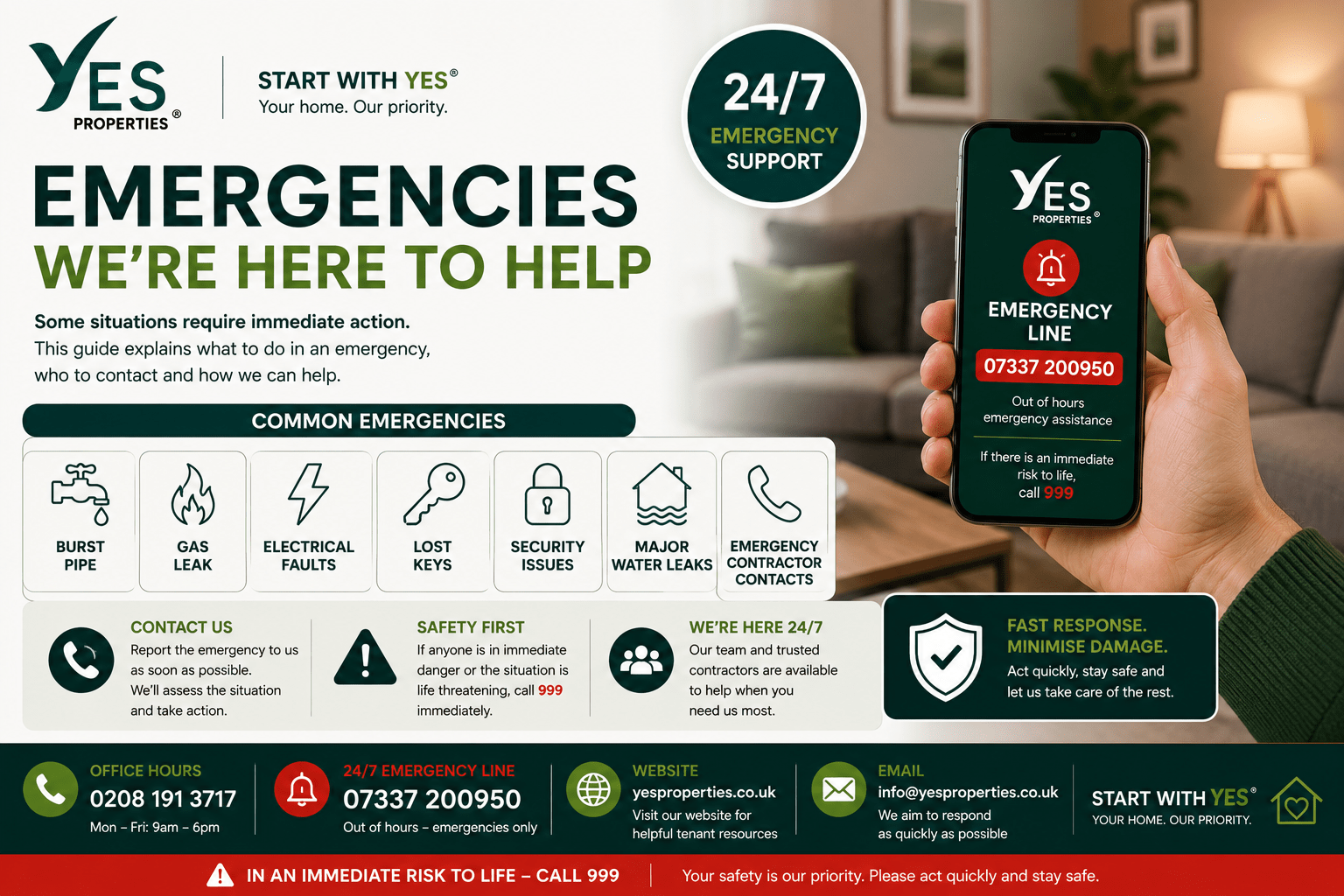
Some situations require immediate action.
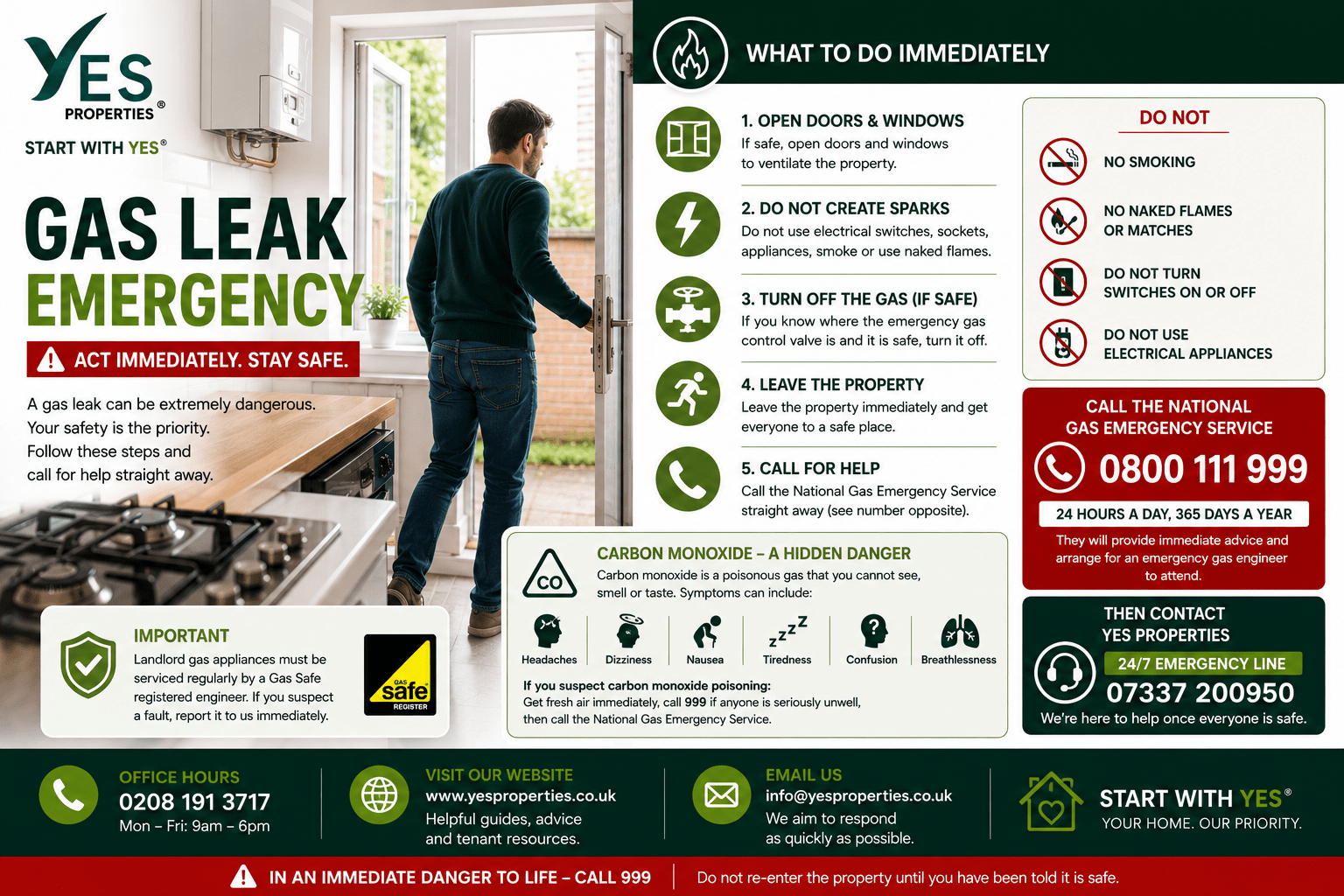
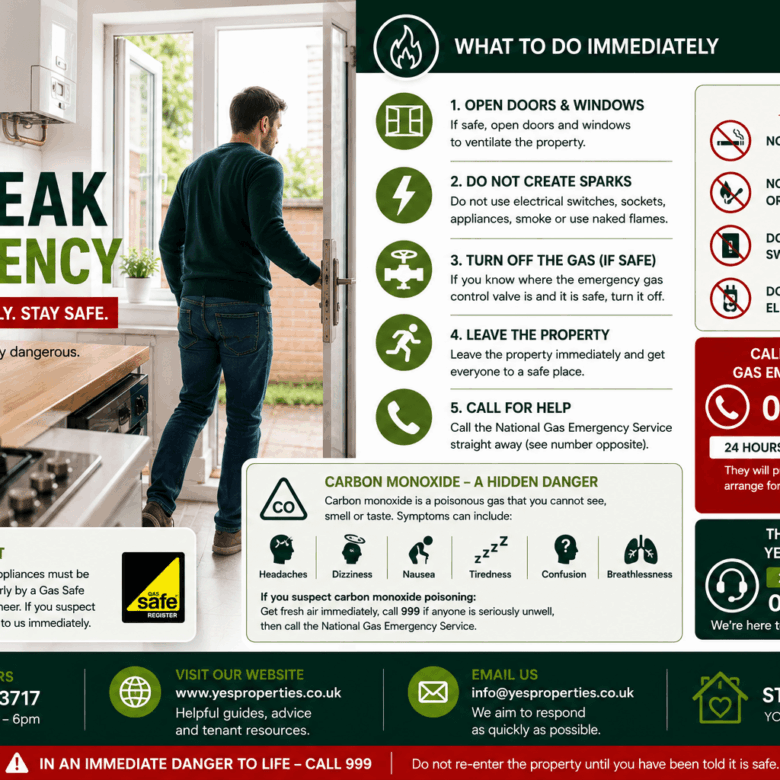
Our emergency guidance explains what to do if you experience:
We’ll explain when to contact us, when to contact the emergency services and when to contact your utility provider directly.
Interactive Checklists
Many of our resources are available as printable PDF checklists.
Examples include:
Moving In Checklist
– Read your tenancy agreement
– Check the inventory
– Record meter readings
– Register for Council Tax
– Arrange broadband
– Test smoke alarms
– Check all keys work
– Save emergency contact numbers
Moving Out Checklist
– Give notice correctly
– Arrange professional cleaning (if required)
– Remove all belongings
– Take final meter readings
– Return all keys
– Redirect your post
– Cancel utilities
– Attend the check-out inspection (where possible)
Why We Created These Resources
Renting a property involves more than simply collecting the keys.
There are legal responsibilities, practical tasks and important deadlines throughout the tenancy.
Rather than expecting tenants to search multiple websites for answers, we’ve created a single resource centre where you can quickly find reliable, easy-to-understand information whenever you need it.
Whether you’re moving into your first rented home or have rented for many years, we hope these resources help make your tenancy simpler and more enjoyable.
Resource Categories
Our Tenant Hub is organised into the following sections:
🏠 Finding a Property
📋 Applying for a Tenancy
📄 Agreements & Documents
💷 Rent & Deposits
🛠 Repairs & Maintenance
🏡 Living in Your Home
⚖ Tenant Rights & Responsibilities
📦 Moving Out
📥 Downloads & Checklists
📚 Official Government Guidance
As our knowledge base grows, these sections will automatically include new articles, videos and downloadable resources.
YES Expert Tip
Download and keep copies of important tenancy documents in a dedicated folder. Having easy access to your tenancy agreement, inventory, prescribed information, safety certificates and correspondence can save time if you need to refer to them later.
Tenant Hub
Finding & Securing Your New Home
Finding the right rental property is about much more than simply browsing photographs online.
Choosing a home that suits your lifestyle, budget and long-term plans can help you enjoy a happier tenancy and avoid unnecessary problems later.
This guide explains the process from your first property search through to signing your tenancy agreement, helping you understand what to expect at every stage.
Step 1 – Finding the Right Property
Every tenant has different priorities.
Some people want to be close to work.
Others prioritise schools, transport links, green spaces or local amenities.
Before arranging viewings, think about what’s most important to you.
Consider:
✔ Your monthly budget
✔ Location
✔ Commuting time
✔ Parking requirements
✔ Garden or outside space
✔ Number of bedrooms
✔ Broadband availability
✔ Local schools
✔ Public transport
✔ Shops and healthcare
✔ Pet requirements
The clearer your requirements, the easier it is to find the right home.
Register Your Requirements
Many of our properties are matched to registered applicants before they become widely known.
Registering your requirements allows us to notify you when a suitable property becomes available.
Typical information includes:
Preferred locations
Budget
Number of bedrooms
Move-in date
Furnished or unfurnished
Parking requirements
Pet requirements
Accessibility needs
The more information you provide, the better we can match suitable properties to your needs.
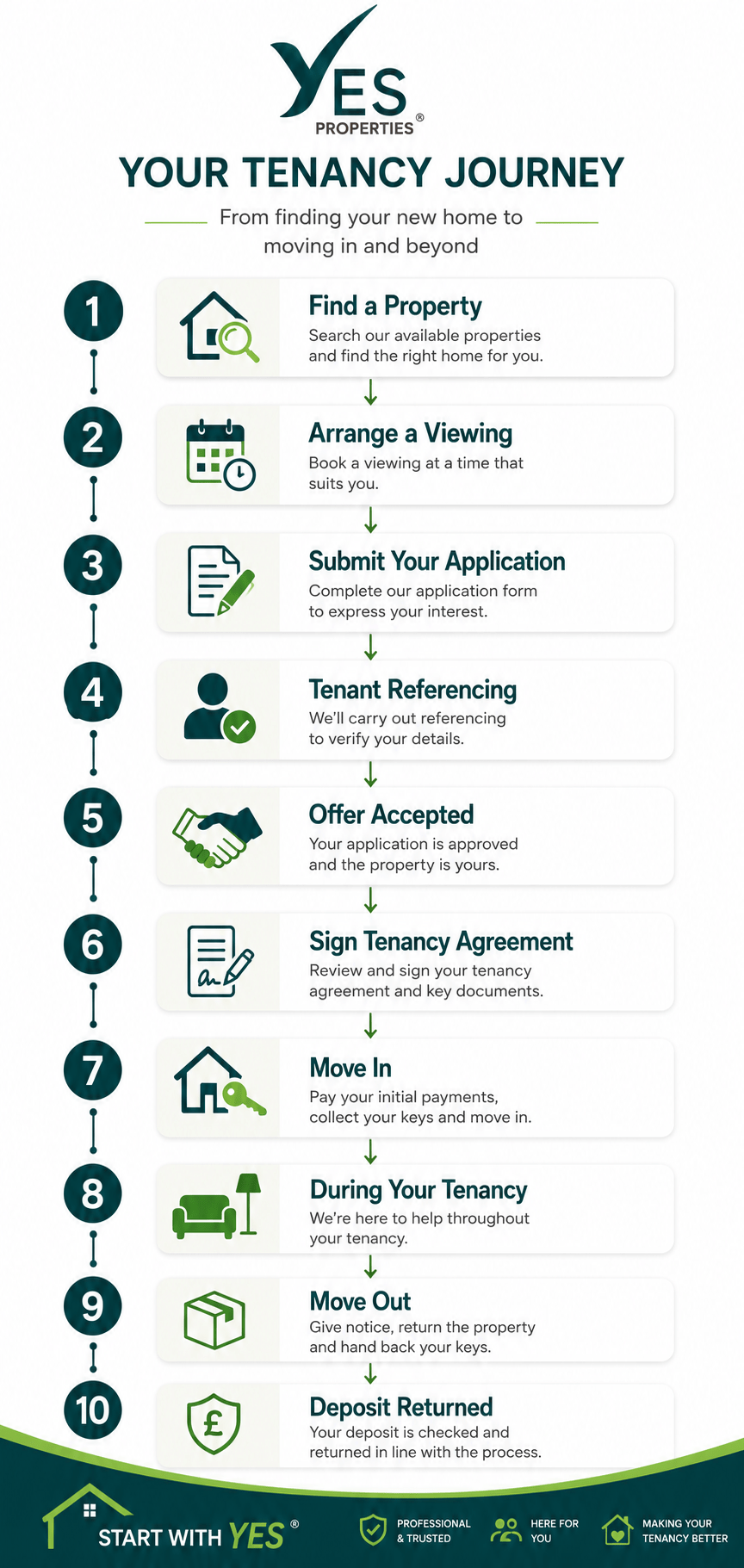
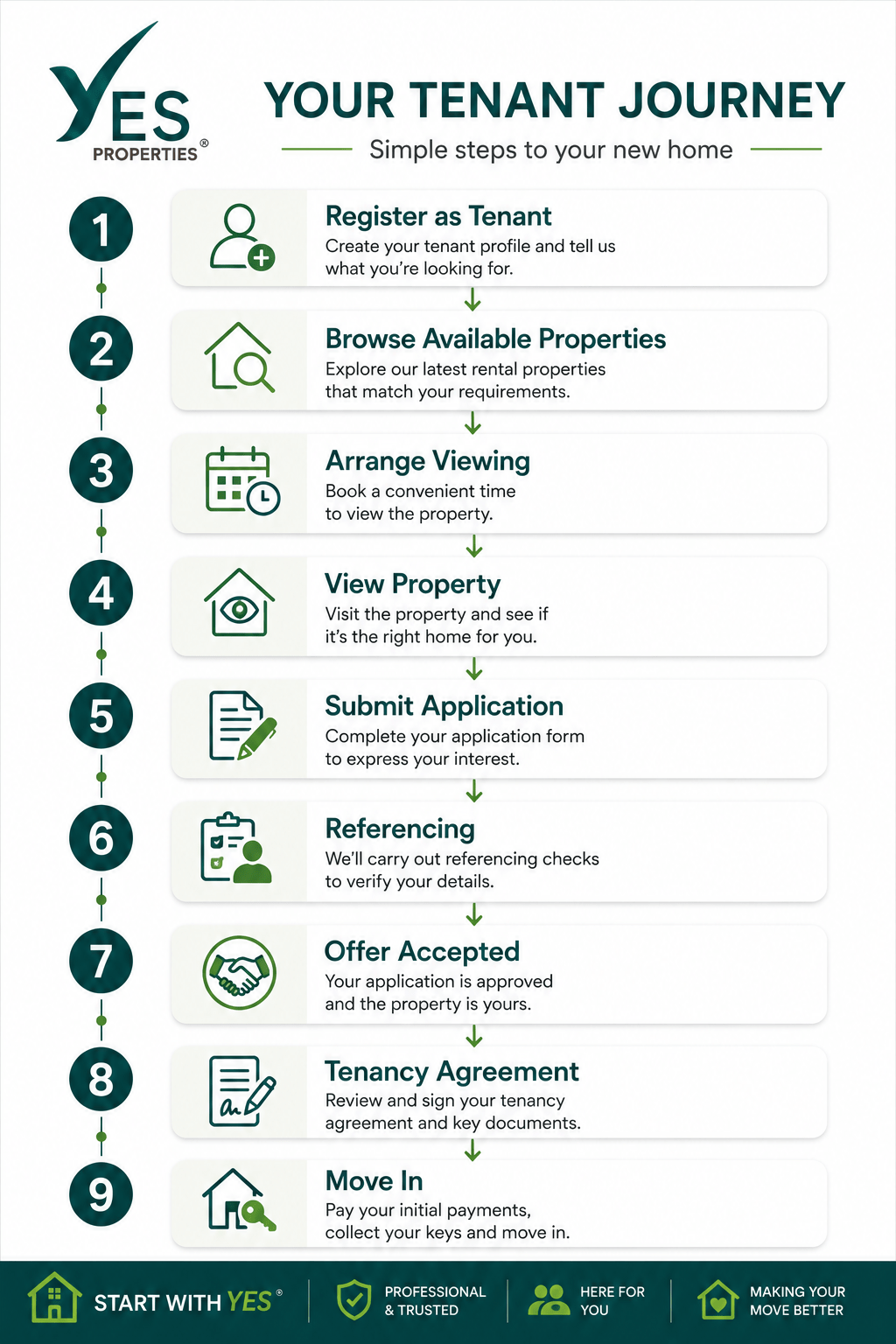
Your Property Search Journey
Understand every stage of renting with Yes Properties—from registering as a tenant and finding your ideal home to completing referencing, signing your tenancy agreement and collecting the keys to your new property.
Arranging a Viewing
Once you’ve found a property you’re interested in, the next step is arranging a viewing.
Viewings give you the opportunity to see much more than photographs can show.
Take your time.
Look carefully at every room.
Imagine yourself living there every day.
If you’re unsure about anything, ask.
We’re here to help.
Viewing Checklist
When viewing a property, consider the following:
Outside
✔ Parking
✔ Garden
✔ External condition
✔ Neighbourhood
✔ Noise levels
Inside
✔ Natural light
✔ Storage
✔ Kitchen condition
✔ Bathroom condition
✔ Heating
✔ Water pressure
✔ Windows
✔ Signs of damp or mould
✔ Broadband availability
✔ Mobile signal
Questions to Ask
What rent is payable?
What deposit is required?
Is the property furnished?
Which bills are included?
When is it available?
How long is the tenancy?
Is parking included?
Is a guarantor required?
Are pets considered?
Never feel embarrassed about asking questions.
It’s much better to understand everything before making an application.
Can I Make More Than One Viewing?
Absolutely.
Many tenants view a property more than once before deciding.
You may also wish to bring:
Your partner
Family member
Friend
A second viewing often helps you notice things you missed the first time.
Making an Application
If you decide you’d like to rent the property, you’ll normally be asked to complete an application form.
This helps us begin the referencing process.
Typical information requested includes:
Full name
Current address
Employment details
Income
Previous landlord
References
Occupiers
Pets
Smoking status
Move-in date
Providing accurate information helps avoid delays later.
Holding Deposits
Once your application has been accepted, you may be asked to pay a holding deposit to reserve the property while referencing is carried out.
A holding deposit is different from a tenancy deposit.
Its purpose is to temporarily reserve the property while both parties proceed with the necessary checks.
Before paying a holding deposit, we’ll explain:
The amount payable.
How long the property will be reserved.
When it may be refunded.
Circumstances in which it may be retained, where permitted by law.
We’ll always explain the process clearly before any payment is requested.
Tenant Referencing
Referencing helps landlords make informed decisions about prospective tenants.
Typical checks may include:
✔ Identity verification
✔ Right to Rent checks (where legally required)
✔ Employment reference
✔ Income verification
✔ Previous landlord reference
✔ Credit history
✔ Affordability assessment
These checks are designed to protect both landlords and tenants by ensuring the tenancy is suitable for everyone involved.
How Long Does Referencing Take?
Every application is different.
The timescale depends on factors such as:
Employers responding promptly.
Previous landlords replying.
Identity checks.
Supporting documents.
Guarantor information (if required).
Providing documents quickly can often help speed up the process.
Guarantors
Some tenancies require a guarantor.
A guarantor agrees to fulfil certain obligations under a guarantee if the tenant fails to do so, in accordance with the terms of the guarantee agreement.
A guarantor may be requested where, for example:
Income does not meet affordability requirements.
Employment has recently changed.
There is limited UK rental history.
A student tenancy is involved.
We’ll explain if a guarantor is required and what documents they will need to provide.
Right to Rent
Landlords and letting agents have legal responsibilities to carry out Right to Rent checks where required by law.
These checks confirm whether an adult occupier has the legal right to rent residential accommodation in England.
The checks are carried out before the tenancy begins and, in some cases, may require follow-up checks.
We’ll guide you through this process if it applies to your tenancy.
Receiving an Offer
Once referencing has been completed successfully and the landlord has approved your application, we’ll normally confirm the offer.
We’ll then discuss:
Proposed move-in date.
Initial rent payment.
Tenancy deposit.
Signing the tenancy agreement.
Collecting keys.
At this stage, you’re only a few steps away from moving into your new home.
Frequently Asked Questions
Do I need to view a property before applying?
In most cases, yes. Viewing the property allows you to decide whether it’s suitable before committing to the application process.
What documents should I prepare?
It’s helpful to have:
Proof of identity.
Proof of current address.
Employment details.
Recent payslips (if applicable).
Bank statements (where requested).
Previous landlord details.
Having these ready can speed up your application.
Can I apply if I’m self-employed?
Yes.
You may simply be asked for different financial documents to demonstrate affordability.
What happens if my application isn’t successful?
We’ll explain the outcome where we can and, if appropriate, help you find another suitable property.
Can I reserve a property before referencing?
This will depend on the landlord’s instructions and whether a holding deposit is required.
We’ll explain the process clearly before asking you to make any payment.
Tenant Application Checklist
✔ Register with Yes Properties
✔ Arrange a viewing
✔ Ask questions about the property
✔ Submit your application promptly
✔ Provide supporting documents
✔ Respond quickly to referencing requests
✔ Arrange your move
✔ Sign your tenancy agreement
✔ Collect your keys
YES Expert Tip: Good preparation is one of the best ways to secure a rental property. Having your identification, proof of income and supporting documents ready before you apply can help your application progress more quickly and demonstrate to the landlord that you’re organised and ready to move.
Tenant Hub
Before You Move In
Congratulations!
Your application has been approved and the landlord has agreed to offer you the tenancy.
Before you collect your keys, there are a few important steps to complete. This guide explains what you can expect, what documents you’ll receive and why each one matters.
At Yes Properties, we believe that moving into your new home should be exciting—not confusing.
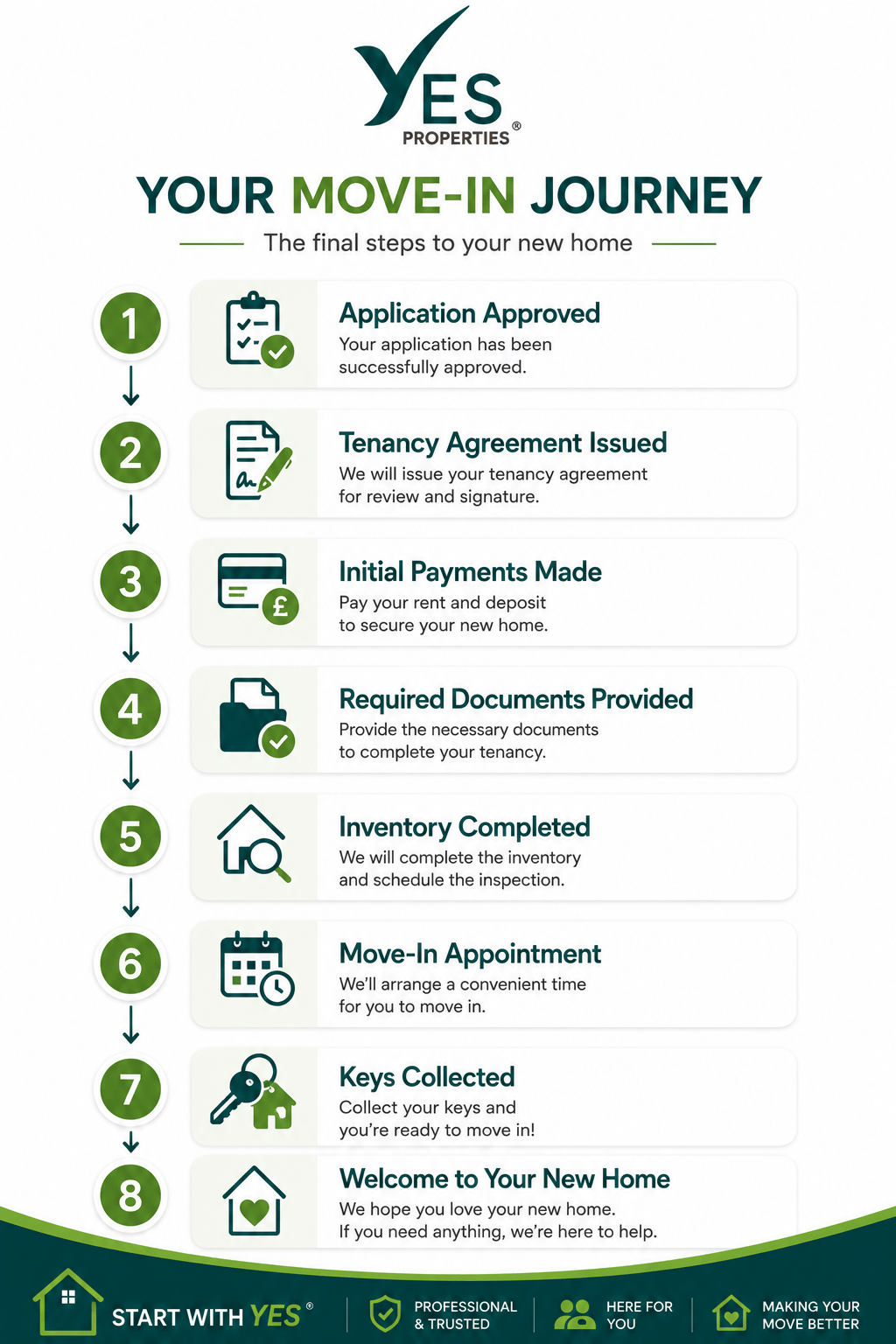
Your Move-In Journey
Discover what happens after your tenancy application is approved, including signing your tenancy agreement, making initial payments, receiving important documents, completing the inventory and collecting the keys to your new home.
Your Tenancy Agreement
One of the most important documents you’ll receive is your Tenancy Agreement.
This sets out the legal terms agreed between you and the landlord.
It explains matters such as:
The property address.
Who the tenants are.
The landlord’s details.
The rent.
When rent is due.
The tenancy start date.
Your responsibilities.
The landlord’s responsibilities.
Any special conditions.
We strongly recommend reading the agreement carefully before signing.
If there is anything you don’t understand, please ask us—we’ll be happy to explain it in plain English.
Initial Payments
Before moving in, you’ll usually be asked to make the agreed initial payments.
These may include:
✔ First rent payment.
✔ Tenancy deposit.
✔ Any other lawful payments agreed in advance.
We’ll always explain what each payment is for and provide confirmation once it has been received.
Your Tenancy Deposit
Most private residential tenancies require a tenancy deposit.
The deposit is held as security against potential losses that may arise under the tenancy agreement, such as damage beyond fair wear and tear or unpaid rent, subject to the terms of the agreement and applicable law.
Where the law requires it, deposits must be protected in an approved tenancy deposit protection scheme.
You’ll receive information explaining:
Which scheme protects your deposit.
The amount protected.
How the scheme works.
How your deposit is returned at the end of the tenancy.
How disputes can be resolved if necessary.
Important Documents You’ll Receive
Before or at the start of your tenancy, you’ll normally receive a number of important documents.
These help you understand your rights, the property and the tenancy itself.
Depending on your tenancy and the applicable legal requirements, these may include:
Your signed Tenancy Agreement.
Deposit protection information.
Inventory and Schedule of Condition.
Energy Performance Certificate (EPC).
Gas Safety Record (where applicable).
Electrical Installation Condition Report (EICR), where required.
Smoke and carbon monoxide alarm information.
Prescribed written information required by current legislation.
Other information required by law or relevant to your tenancy.
Some documents are legal requirements, while others are provided as good practice to help you enjoy a safe and well-managed tenancy.
Please note: The documents required can vary depending on the type of tenancy and changes in legislation. If you’re unsure whether you’ve received everything you should, please contact us.
Inventory & Schedule of Condition
Before you move in, an inventory may be prepared.
This records the condition of the property at the start of your tenancy.
It may include:
Photographs.
Room descriptions.
Fixtures and fittings.
Furniture.
Appliances.
Meter readings.
Keys supplied.
The inventory helps protect both you and the landlord by providing an agreed record of the property’s condition at the start of the tenancy.
Why You Should Check the Inventory
When you receive the inventory:
✔ Read it carefully.
✔ Check every room.
✔ Compare it with the property.
✔ Report anything you think is incorrect.
✔ Return any comments within the requested timescale.
This helps ensure the record is accurate from the outset.
Safety Checks
Before moving in, we recommend familiarising yourself with the property’s safety features.
Take a few moments to locate:
Smoke alarms.
Carbon monoxide alarms (where installed).
Consumer unit (fuse box).
Water stopcock.
Gas shut-off valve (if applicable).
Emergency exits.
Knowing where these are can save valuable time in an emergency.
Meter Readings
On the day you move in, it’s good practice to record:
Electricity meter.
Gas meter (where applicable).
Water meter (if fitted).
Taking photographs of the readings provides a useful record when setting up your utility accounts.
Utilities
After moving in, you’ll usually need to contact utility providers to:
Register your account.
Confirm opening meter readings.
Arrange payment.
Typical services include:
Electricity.
Gas.
Water.
Broadband.
Television services (if required).
We’ll let you know if any utilities are included in your tenancy.
Council Tax
Most tenants are responsible for notifying the local authority that they have moved into the property and for paying Council Tax where applicable.
If you’re unsure about your liability or whether any discounts or exemptions apply, contact the relevant local authority for guidance.
Collecting Your Keys
Once everything has been completed, we’ll arrange a convenient move-in appointment.
During this appointment we’ll normally:
✔ Confirm your identity.
✔ Hand over your keys.
✔ Explain any important property information.
✔ Answer any final questions.
You’ll then be ready to move into your new home.
Your First Day Checklist
On your first day we recommend:
– Read your inventory.
– Take your own photographs.
– Record meter readings.
– Test smoke alarms.
– Locate the stopcock.
– Locate the fuse box.
– Check windows and locks.
– Save emergency contact numbers.
– Register with utility suppliers.
– Register for Council Tax if applicable.
– Introduce yourself to your neighbours.
These simple tasks can help your tenancy get off to a smooth start.
Frequently Asked Questions
Can I move in before I’ve signed the tenancy agreement?
No. The tenancy agreement should be completed before you move into the property.
When do I receive my keys?
Keys are usually handed over once the tenancy has commenced and all agreed requirements have been completed.
What should I do if I notice something wrong on my first day?
Let us know as soon as possible. Reporting issues promptly helps us update the inventory where appropriate and arrange any necessary action.
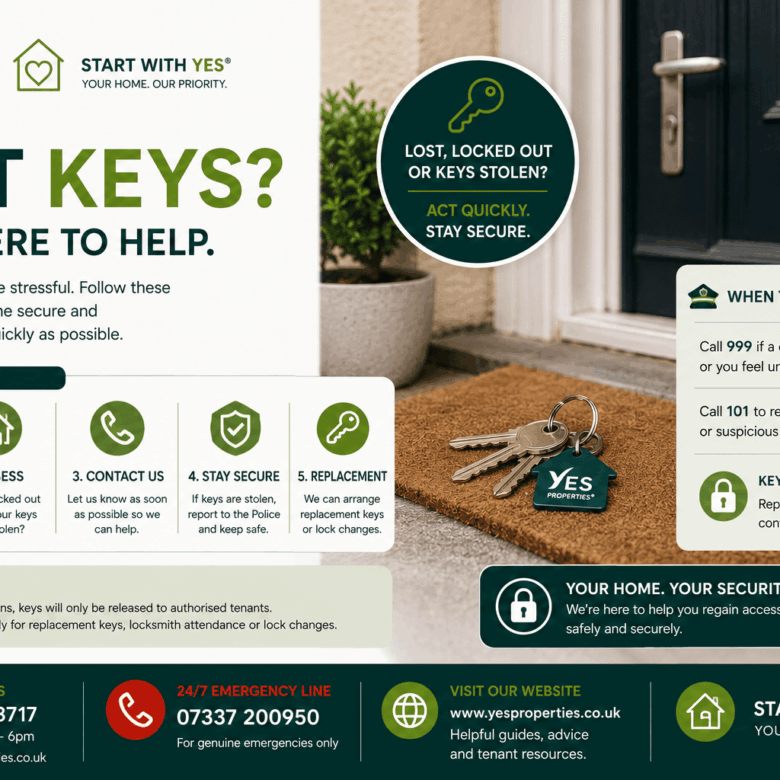
What if I lose a key?
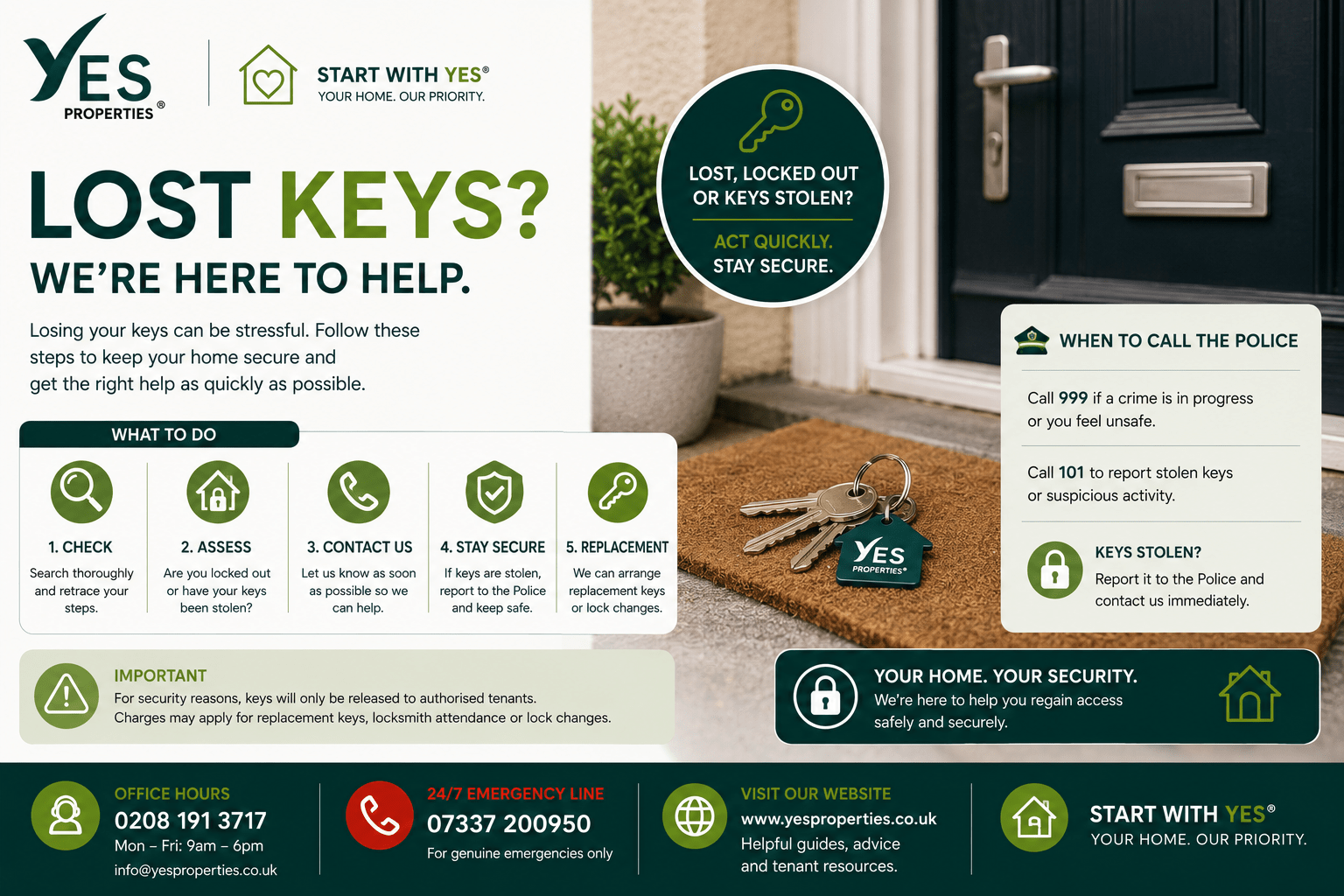
Contact us immediately. Depending on the circumstances, replacement costs or lock changes may be your responsibility under the tenancy agreement.
Should I keep copies of my tenancy documents?
Yes. We recommend storing digital and paper copies of important documents in a safe place so they’re easy to access whenever you need them.
Your Tenant Document Folder
We recommend creating a folder containing:
📄 Tenancy Agreement
📄 Deposit Protection Information
📄 Inventory
📄 EPC
📄 Gas Safety Record (where applicable)
📄 Electrical Safety Report (where applicable)
📄 Prescribed Information
📄 Emergency Contacts
📄 Important emails and letters
Having everything organised makes it much easier to refer back to important information during your tenancy.
YES Expert Tip: Don’t just sign your tenancy agreement and put it away. Take a little time to read through it, review the inventory carefully and save all of your tenancy documents. Understanding your agreement from the beginning can help prevent misunderstandings and ensure a smoother tenancy for both you and your landlord.
Tenant Hub
Living in Your Rental Property
Moving into your new home is just the beginning of your tenancy.
This guide explains what you can expect while you’re living in the property, including paying rent, reporting repairs, inspections, looking after your home and understanding your responsibilities as a tenant.
At Yes Properties, we believe good communication and mutual respect help create successful tenancies for everyone involved.
Living in Your New Home
Once you’ve collected your keys, your tenancy officially begins.
Throughout your tenancy we’ll continue to support you, answer your questions and, where we’re managing the property, act as your main point of contact.
Our aim is to help ensure your tenancy is enjoyable, safe and hassle-free.
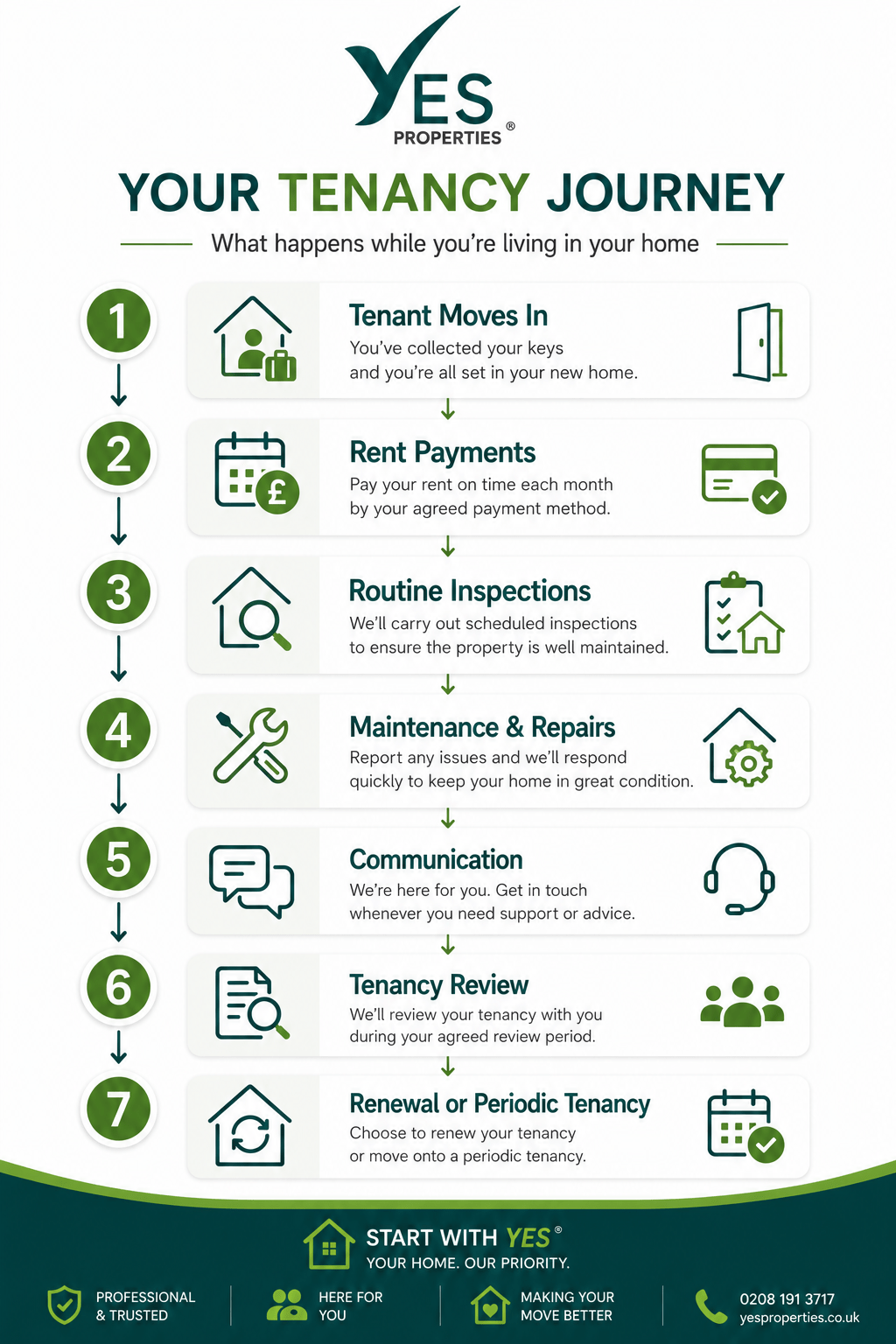
Your Tenancy Journey
Learn what happens after you move into your rental property, including paying rent, reporting repairs, routine inspections, communicating with your managing agent and renewing your tenancy.
Paying Your Rent
Paying your rent on time is one of the most important responsibilities during your tenancy.
Your tenancy agreement will explain:
Rent amount.
Payment frequency.
Due date.
Payment method.
Bank details (where applicable).
We recommend setting up a standing order to help ensure payments are made on time.
If you think you may have difficulty paying your rent, please let us know as soon as possible. Early communication often allows issues to be addressed before they become more serious.
Looking After Your Home
Although the property belongs to the landlord, it is your home during the tenancy.
We ask tenants to treat it with reasonable care by:
✔ Keeping the property clean.
✔ Ventilating rooms regularly.
✔ Reporting repairs promptly.
✔ Looking after appliances.
✔ Maintaining any garden where this is your responsibility.
✔ Taking reasonable steps to prevent avoidable damage.
Looking after the property helps maintain a pleasant home and can make the end-of-tenancy process much smoother.
Repairs & Maintenance
Things occasionally go wrong in every property.
If something needs repairing, please tell us as soon as possible.
Reporting problems early often prevents them becoming larger and more expensive.
Examples include:
Leaking taps.
Boiler faults.
Heating problems.
Electrical issues.
Water leaks.
Broken windows.
Faulty appliances.
Plumbing problems.
How to Report a Repair
We’ll provide clear instructions on how to report maintenance issues.
When reporting a repair, try to include:
Your property address.
A description of the problem.
Photographs where possible.
When the issue started.
Whether the problem is getting worse.
The more information you provide, the quicker we can assess the situation.
If there is an immediate danger to life or property, contact the appropriate emergency service or utility provider first, then notify us as soon as possible.
We’ll explain our emergency reporting procedure in your welcome information.
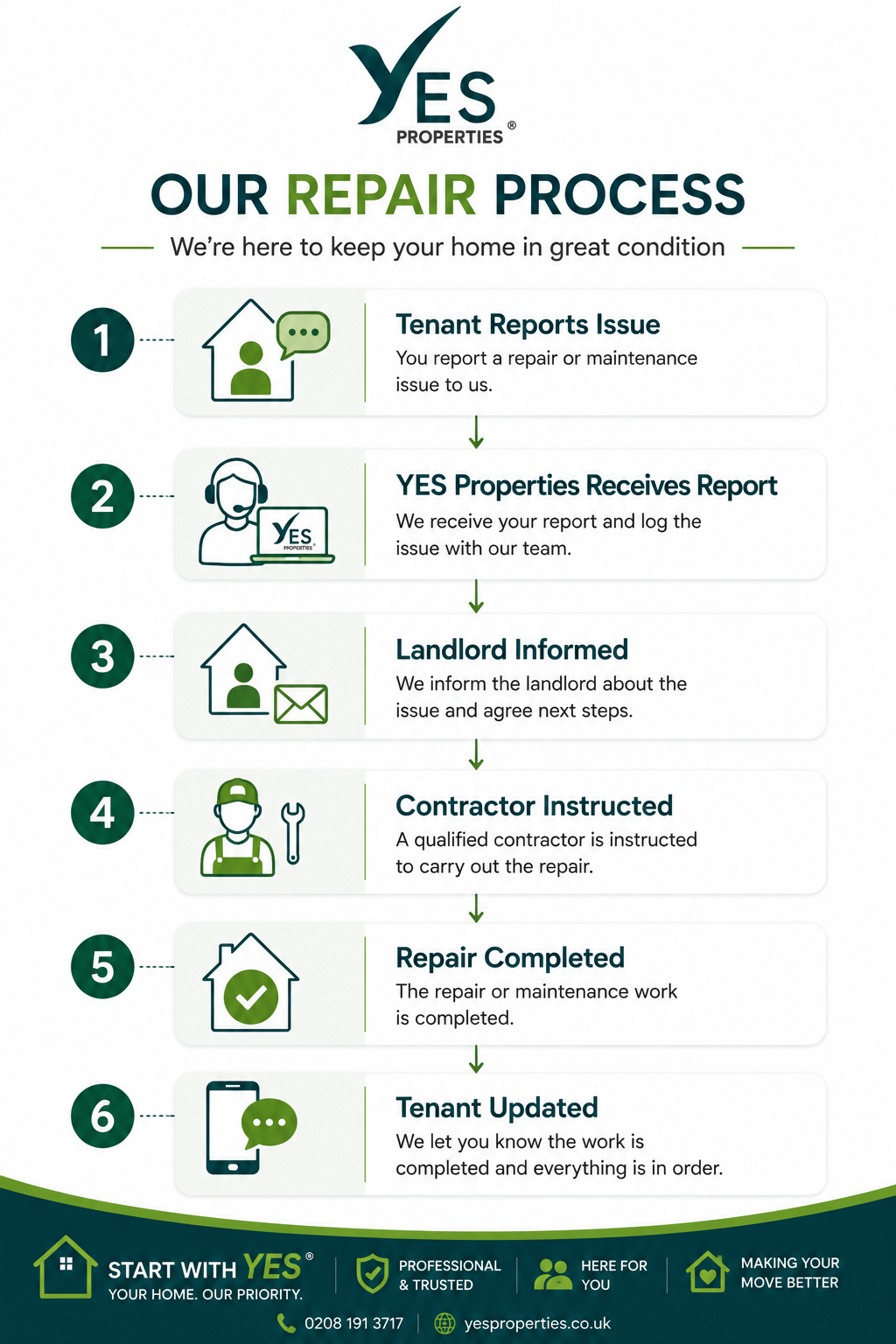
Our Repair Process
Our simple repair and maintenance process keeps tenants informed every step of the way—from reporting a maintenance issue to arranging repairs and confirming when the work has been completed.
Throughout the process we’ll aim to keep you informed of progress.
Routine Property Inspections
If we’re managing the property, periodic inspections may be carried out.
These inspections are not designed to inconvenience you.
Their purpose is to:
Check the property’s general condition.
Identify maintenance issues.
Ensure safety equipment remains in place.
Help prevent small problems becoming larger ones.
We’ll normally contact you in advance to arrange a suitable appointment, except where the law permits otherwise or there is an emergency.
Condensation & Mould
Condensation is one of the most common issues reported in rental properties.
Simple everyday habits can often reduce condensation, including:
Opening windows regularly.
Using extractor fans.
Drying clothes in well-ventilated areas.
Keeping a consistent level of heating where possible.
Avoiding blocking air vents.
If you notice persistent damp, mould or water ingress, please report it promptly so it can be investigated.
Decorating Your Home
Many tenants like to personalise their home.
Before making any alterations, such as:
Painting walls.
Hanging shelves.
Installing fixtures.
Replacing flooring.
Decorating rooms.
Please obtain the landlord’s permission where required under your tenancy agreement.
Making changes without permission may affect your responsibilities at the end of the tenancy.
Pets
Whether pets are permitted will depend on:
The tenancy agreement.
The landlord’s instructions.
Any superior lease or building rules (for leasehold properties).
Current legislation.
If you’d like to keep a pet after moving in, contact us before making any arrangements.
We’ll discuss the request with the landlord and explain the outcome.
Visitors & Overnight Guests
Having family and friends visit is a normal part of everyday life.
However, if someone intends to stay for an extended period or become an additional occupier, please speak to us first.
This helps ensure the tenancy remains compliant and that the landlord is aware of any significant changes in occupancy.
Keeping the Property Safe
We encourage all tenants to:
✔ Lock doors and windows when leaving.
✔ Test smoke alarms regularly.
✔ Report damaged locks.
✔ Avoid overloading electrical sockets.
✔ Keep escape routes clear.
✔ Store keys safely.
These simple precautions help keep both you and the property secure.
Communication
If you’re unsure about anything during your tenancy, please contact us.
We’re happy to answer questions about:
Repairs.
Rent.
Maintenance.
Safety.
Documents.
Renewals.
Changes in circumstances.
Open communication often helps prevent small concerns becoming larger issues.
If Your Circumstances Change
Please let us know if:
Your contact details change.
Your employment changes and affects your tenancy.
You wish to add or remove an occupier.
You’re considering ending the tenancy.
You need additional support.
Keeping us informed helps us assist you more effectively.
Frequently Asked Questions
Who is responsible for repairs?
This depends on the type of repair and the tenancy agreement. Landlords have legal repairing obligations, while tenants are expected to take reasonable care of the property and report problems promptly.
Can the landlord enter the property whenever they want?
No. Except in emergencies or where the law provides otherwise, landlords or their agents should normally give appropriate notice and arrange access in accordance with the tenancy agreement and legal requirements.
Can I change the locks?
You should not change locks without obtaining any necessary permission under your tenancy agreement. If locks need replacing due to a fault or security concern, contact us first.
What if an appliance stops working?
If the appliance is the landlord’s responsibility under the tenancy agreement, report the fault to us and we’ll arrange the appropriate next steps.
What should I do if I accidentally damage something?
Please let us know as soon as possible. Honest and prompt communication usually leads to quicker and more practical solutions.
Can I redecorate?
Only where permitted by your tenancy agreement or with the landlord’s agreement where required.
Good Tenant Checklist
✔ Pay rent on time.
✔ Report repairs promptly.
✔ Keep the property clean.
✔ Ventilate rooms regularly.
✔ Test smoke alarms.
✔ Keep emergency contact numbers.
✔ Read important emails from your landlord or managing agent.
✔ Ask if you’re unsure about anything.
✔ Treat the property as if it were your own home.
The Benefits of Good Communication
Successful tenancies are built on trust and communication.
When tenants, landlords and managing agents work together:
Repairs are resolved more quickly.
Problems are identified earlier.
Misunderstandings are reduced.
The property remains in better condition.
Everyone enjoys a smoother tenancy.
At Yes Properties, we’re committed to providing professional support throughout your tenancy—not just on the day you move in.
YES Expert Tip: Don’t wait for a small problem to become a big one. Reporting a dripping tap, loose roof tile or minor leak promptly can often prevent more extensive damage, reduce inconvenience and help keep repair costs to a minimum.
Tenant Hub
Renewing, Ending Your Tenancy & Moving Out
Every tenancy eventually reaches an important decision point.
You may decide to:
Stay in your home.
Agree a new tenancy.
Continue under a periodic tenancy (where applicable).
Move to another property.
Whatever your plans, understanding the process can help make the transition as smooth as possible.
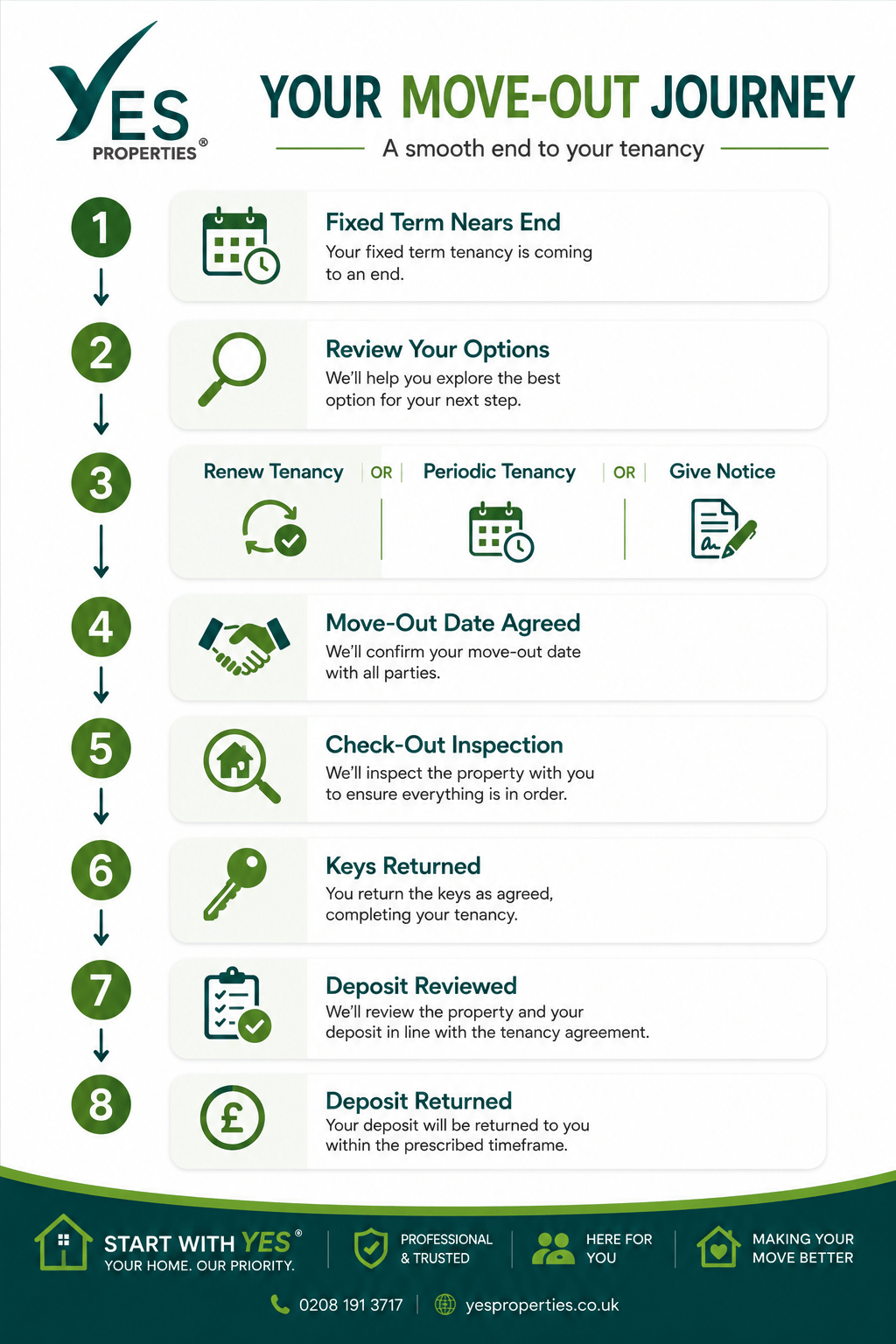
This guide explains what happens at the end of your tenancy, from giving notice through to returning your keys and receiving your deposit.
Your End of Tenancy Journey
Understand what happens when your tenancy comes to an end, including your options to renew, continue on a periodic tenancy or move out, followed by the check-out process and the return of your tenancy deposit.
Your Options at the End of the Tenancy
As your tenancy approaches its end, there are usually several possible outcomes depending on the tenancy agreement, the landlord’s intentions and the law in force at the time.
These may include:
Renewing Your Tenancy
Some landlords and tenants prefer to agree a new tenancy or updated terms.
This may be appropriate where both parties wish the tenancy to continue and new terms have been agreed.
Continuing the Tenancy
Depending on the tenancy type and the legislation in force, the tenancy may continue without signing a completely new agreement.
We’ll explain how this applies to your tenancy if relevant.
Moving Out
If you decide to leave, we’ll guide you through the process and explain what needs to happen before your tenancy ends.
Giving Notice
If you intend to leave the property, it’s important to give notice correctly.
Your tenancy agreement will explain:
How notice should be given.
When it should be given.
Any notice periods that apply.
Giving notice in the correct way helps avoid misunderstandings and ensures everyone can plan for the end of the tenancy.
If you’re unsure, contact us before serving notice—we’ll explain the process.
Preparing to Move
Moving home is much easier with a little planning.
We recommend starting several weeks before your move.
Tasks may include:
✔ Booking a removal company.
✔ Redirecting your post.
✔ Notifying your employer.
✔ Informing banks and service providers.
✔ Updating your driving licence.
✔ Arranging broadband at your new address.
✔ Cancelling or transferring utility accounts.
✔ Packing gradually.
Cleaning the Property
Before handing the property back, we recommend returning it in a clean and tidy condition.
This doesn’t necessarily mean everything must look brand new.
Instead, the aim is to return the property in a condition that reflects your responsibilities under the tenancy agreement, allowing for fair wear and tear.
Areas commonly overlooked include:
Oven.
Fridge.
Kitchen cupboards.
Windows.
Bathrooms.
Carpets (where appropriate).
Garden (if your responsibility).
A little preparation before check-out can often help avoid unnecessary disagreements later.
Fair Wear and Tear
One of the most misunderstood concepts at the end of a tenancy is fair wear and tear.
Normal everyday use naturally causes a property to age over time.
Examples of fair wear and tear may include:
Light carpet wear from normal use.
Minor scuff marks.
Slight fading caused by sunlight.
General ageing of fixtures.
This is different from avoidable damage, such as:
Large holes in walls.
Broken furniture.
Burn marks.
Missing items.
Unauthorised alterations.
Each tenancy is considered on its own facts, taking into account factors such as the age and condition of the item at the start of the tenancy and the length of occupation.
Check-Out Inspection
At the end of your tenancy, a check-out inspection may be carried out.
This usually involves comparing the property’s condition with the original inventory and schedule of condition.
The inspection may include:
General cleanliness.
Decoration.
Fixtures and fittings.
Furniture.
Appliances.
Gardens (where applicable).
Meter readings.
Keys returned.
Whenever possible, we encourage tenants to attend the inspection.
Meter Readings
Before leaving the property, remember to:
✔ Record electricity readings.
✔ Record gas readings (if applicable).
✔ Record water readings (where fitted).
✔ Take photographs.
These readings can help ensure your final utility bills are accurate.
Returning Your Keys
Before your tenancy ends, you’ll normally need to return all keys provided at the start of the tenancy, including:
Front door keys.
Rear door keys.
Window keys.
Garage keys.
Fobs.
Access cards.
Parking permits (where applicable).
Please let us know immediately if any keys have been lost.
Deposit Review
After the tenancy ends, the landlord will normally review the property’s condition using:
The inventory.
The check-out inspection.
Photographs.
Any relevant invoices or quotations (where appropriate).
If both parties agree, the tenancy deposit can then be returned in accordance with the rules of the deposit protection scheme.
If there is a disagreement, the relevant tenancy deposit scheme provides a free dispute resolution service.
Getting Your Deposit Back
One of the most common questions we receive is:
“How can I maximise my chances of receiving my full deposit back?”
Our advice is simple:
✔ Give proper notice.
✔ Clean the property thoroughly.
✔ Remove all belongings.
✔ Return all keys.
✔ Report any accidental damage honestly.
✔ Attend the check-out inspection if possible.
✔ Keep copies of important correspondence.
Most tenancies end smoothly when both parties communicate openly and prepare in advance.
End of Tenancy Checklist
We’ve created a downloadable checklist to help you prepare.
Your checklist includes:
□ Give notice correctly.
□ Arrange removals.
□ Redirect your post.
□ Notify utility providers.
□ Take final meter readings.
□ Clean the property.
□ Remove all personal belongings.
□ Check cupboards and loft spaces.
□ Return all keys.
□ Attend the check-out inspection.
□ Keep copies of your final correspondence.
Frequently Asked Questions
Can I leave before my tenancy ends?
This depends on your tenancy agreement and whether the landlord agrees. Speak to us as early as possible so we can explain the options available.
What happens if I accidentally damage something?
Please let us know promptly. Honest communication often helps resolve matters more easily than waiting until the check-out inspection.
Will I automatically lose my deposit if something is damaged?
Not necessarily.
Any proposed deductions should be considered in accordance with the tenancy agreement, the inventory, evidence available and the rules of the tenancy deposit protection scheme.
What if I disagree with a proposed deduction?
If agreement cannot be reached, the tenancy deposit protection scheme provides an independent dispute resolution process.
We’ll explain how this works if needed.
Can I leave items behind?
Only if this has been agreed in advance.
Leaving unwanted belongings may delay the end of the tenancy and could result in additional costs where permitted by law.
How long does it take to receive my deposit?
This will depend on the deposit protection scheme, whether there are any proposed deductions and how quickly both parties respond. Once agreement has been reached, deposits are normally returned through the relevant protection scheme.
Helpful Downloads
The following downloadable resources are available from our Tenant Hub:
📥 Moving Out Checklist
📥 End of Tenancy Cleaning Guide
📥 Utility Closing Checklist
📥 Address Change Checklist
📥 Deposit Return Guide
📥 Inventory Checklist
📥 Check-Out Preparation Guide
📥 Fair Wear and Tear Guide
📥 Emergency Contacts Sheet
📥 Tenant Document Checklist
These practical guides are designed to make moving out easier and reduce the risk of common end-of-tenancy issues.
Thank You
Whether you’ve rented through Yes Properties for six months or several years, we’d like to thank you for choosing us.
We hope you’ve enjoyed your home and found our guidance helpful throughout your tenancy.
If you’re looking for your next property, we’d be delighted to help you again.
Continue Your Property Journey
Ready for your next move?
Looking to Rent Again?
Browse our latest available properties or register your requirements and we’ll let you know when a suitable home becomes available.
YES Expert Tip: A successful tenancy doesn’t end on the day you move out—it ends when both the tenant and landlord feel the process has been fair, transparent and well managed. Preparing early, communicating openly and keeping good records are the best ways to achieve a smooth check-out and a prompt return of your deposit.
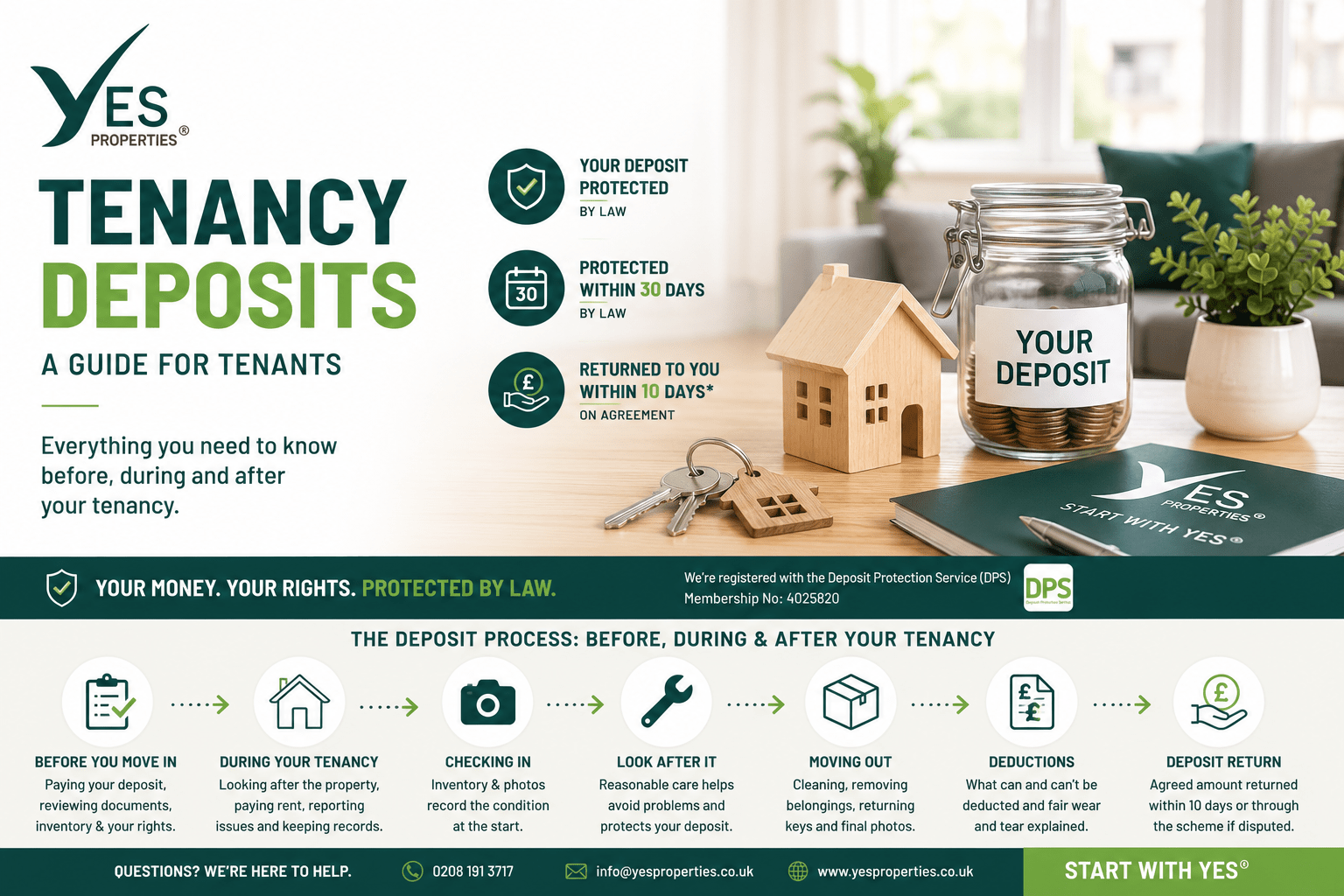
Modern rental property with keys, a protected tenancy deposit and home illustration representing the tenant deposit protection process before, during and after a tenancy in England by Yes Properties.
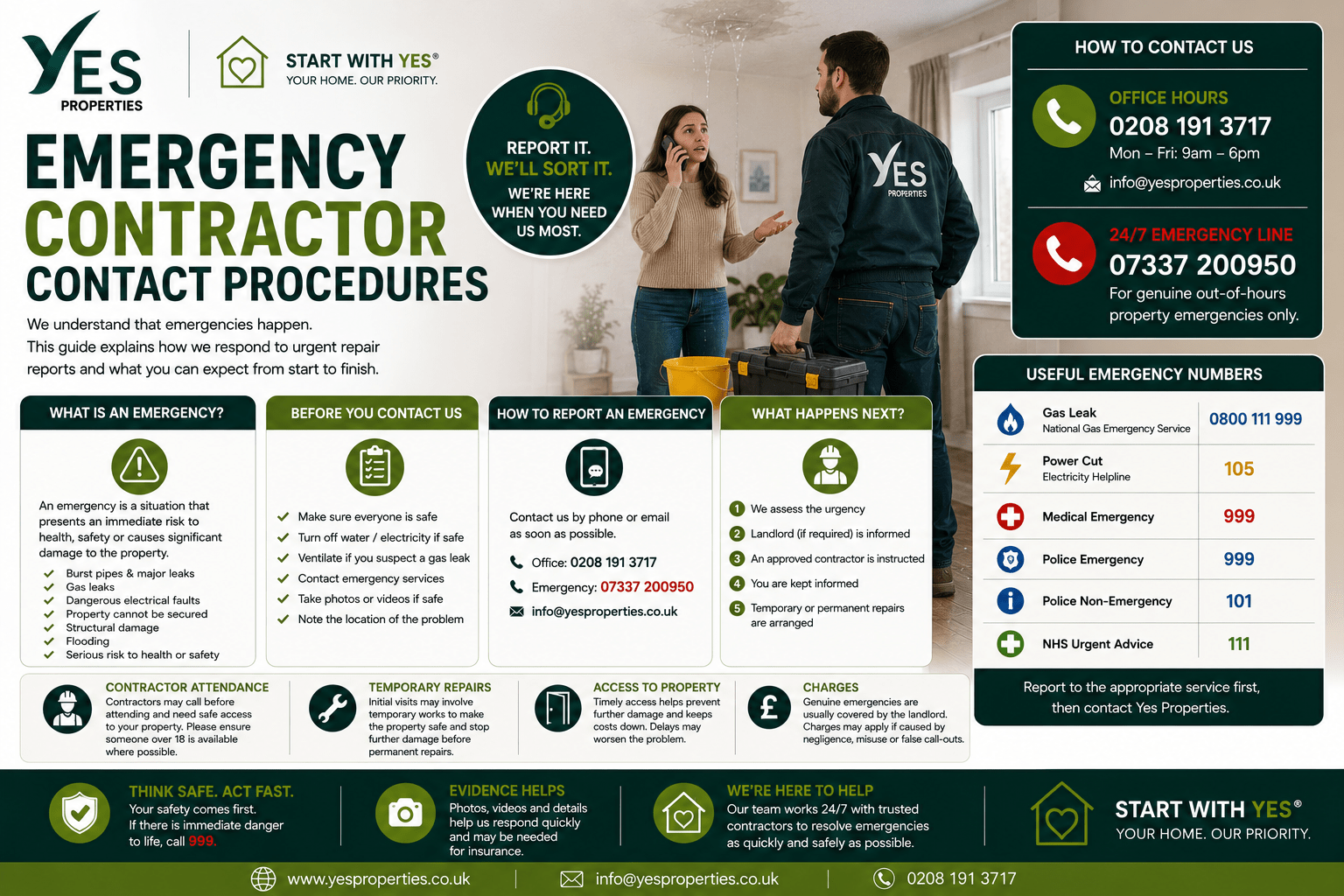
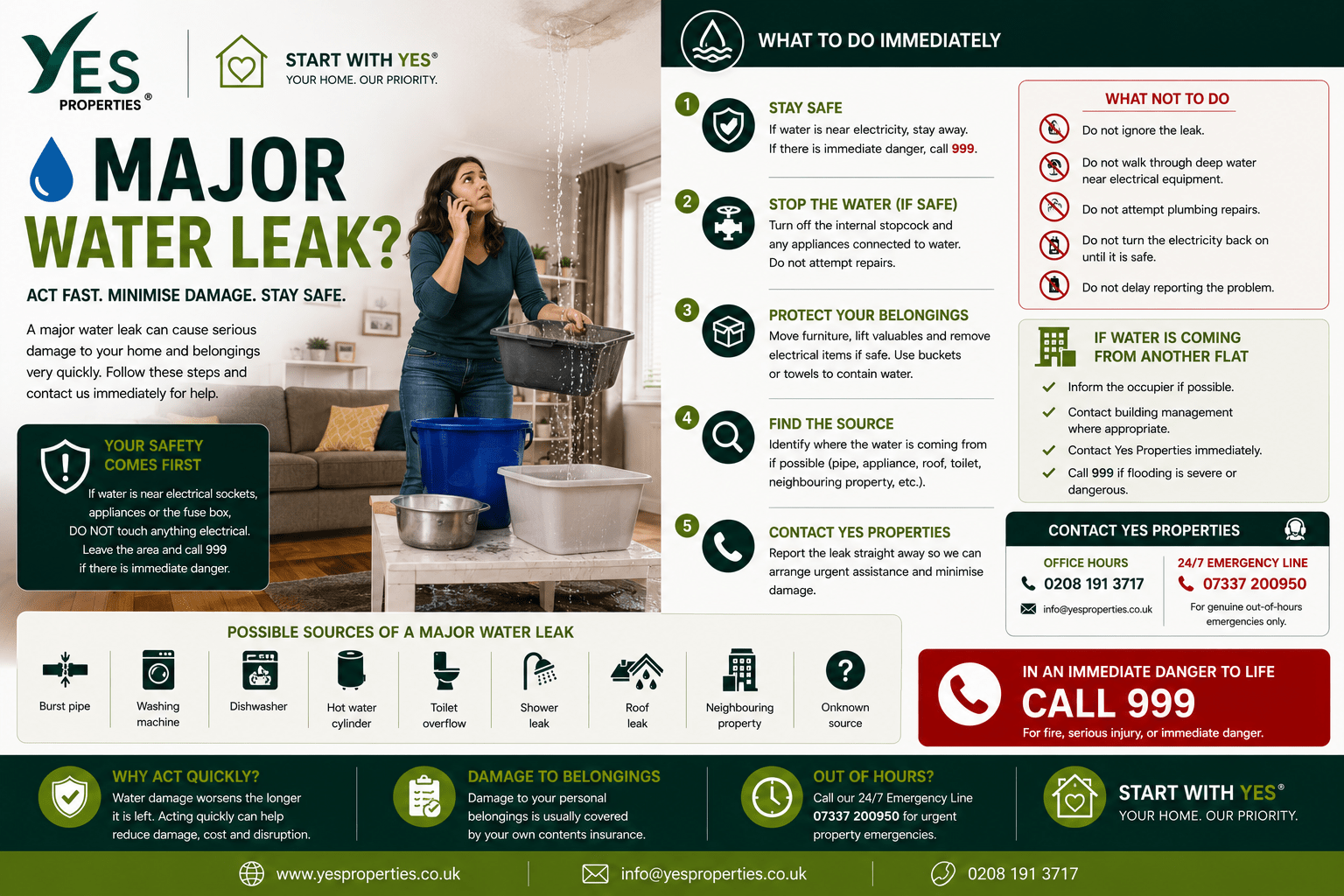
Tenant discovering a major water leak inside a rental property while contacting Yes Properties for emergency assistance and protecting belongings from flood damage.
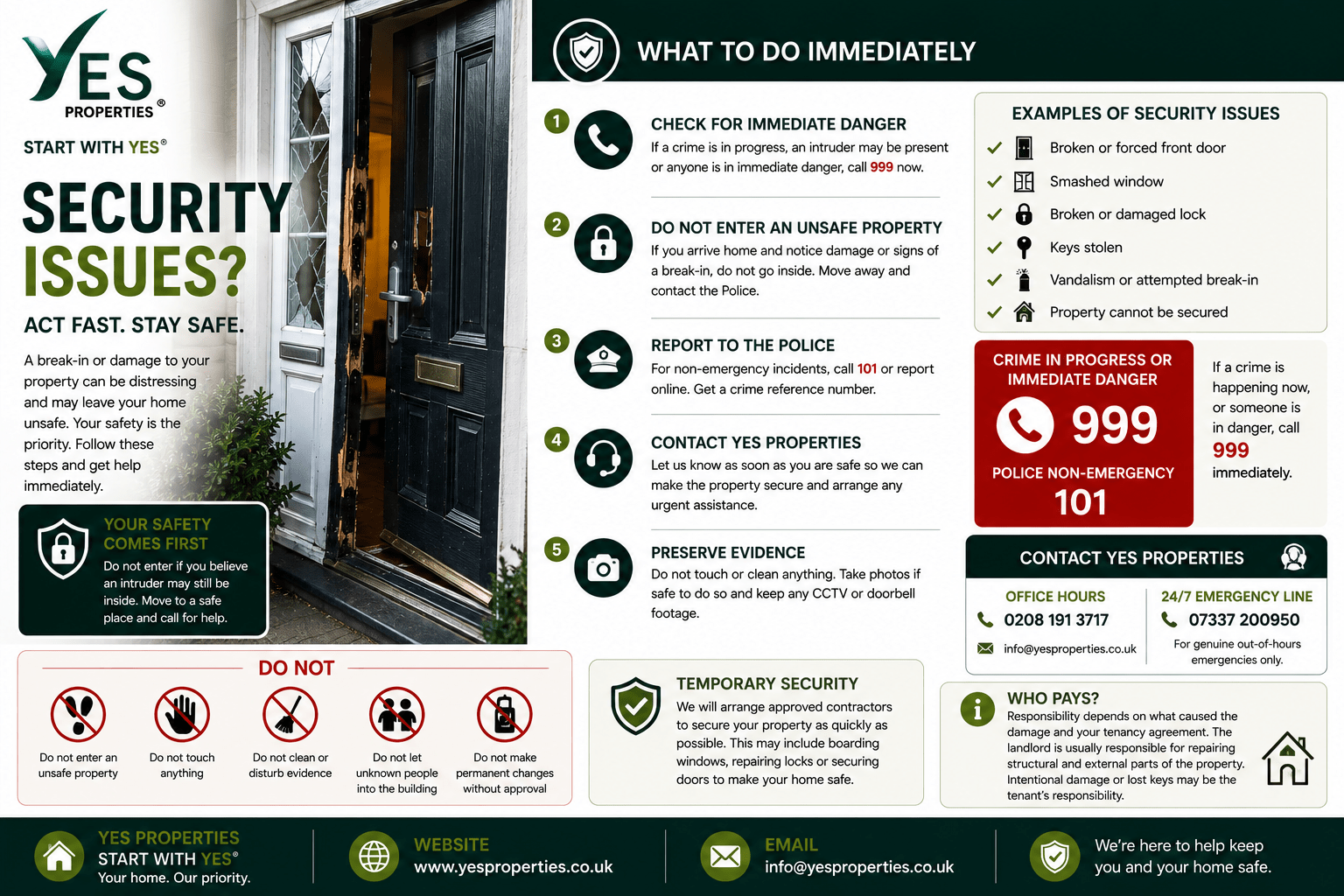
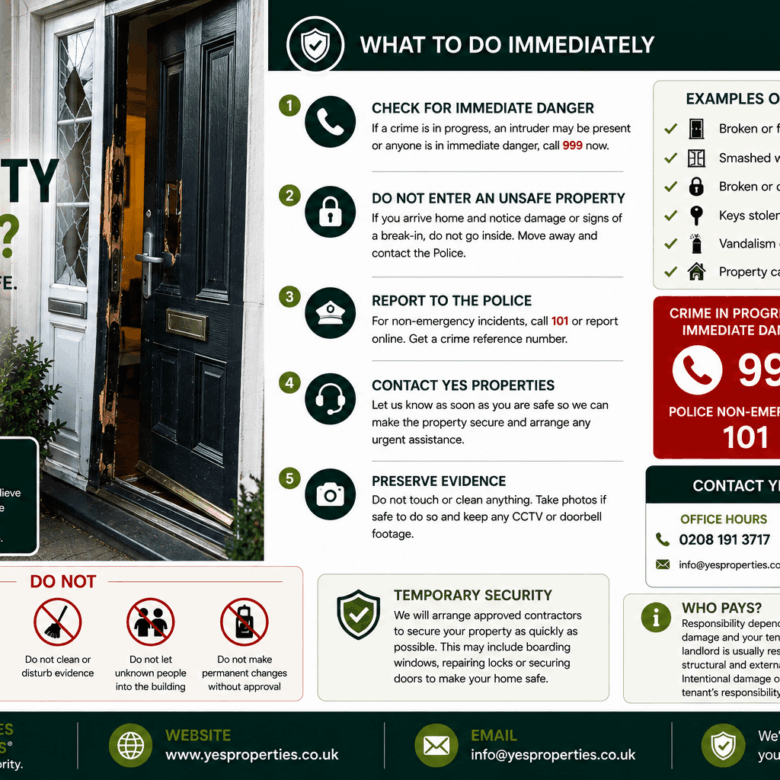
Broken lock, damaged door or suspected break-in? Learn what to do, when to call 999 or 101, and how to report an urgent security issue to Yes Properties.
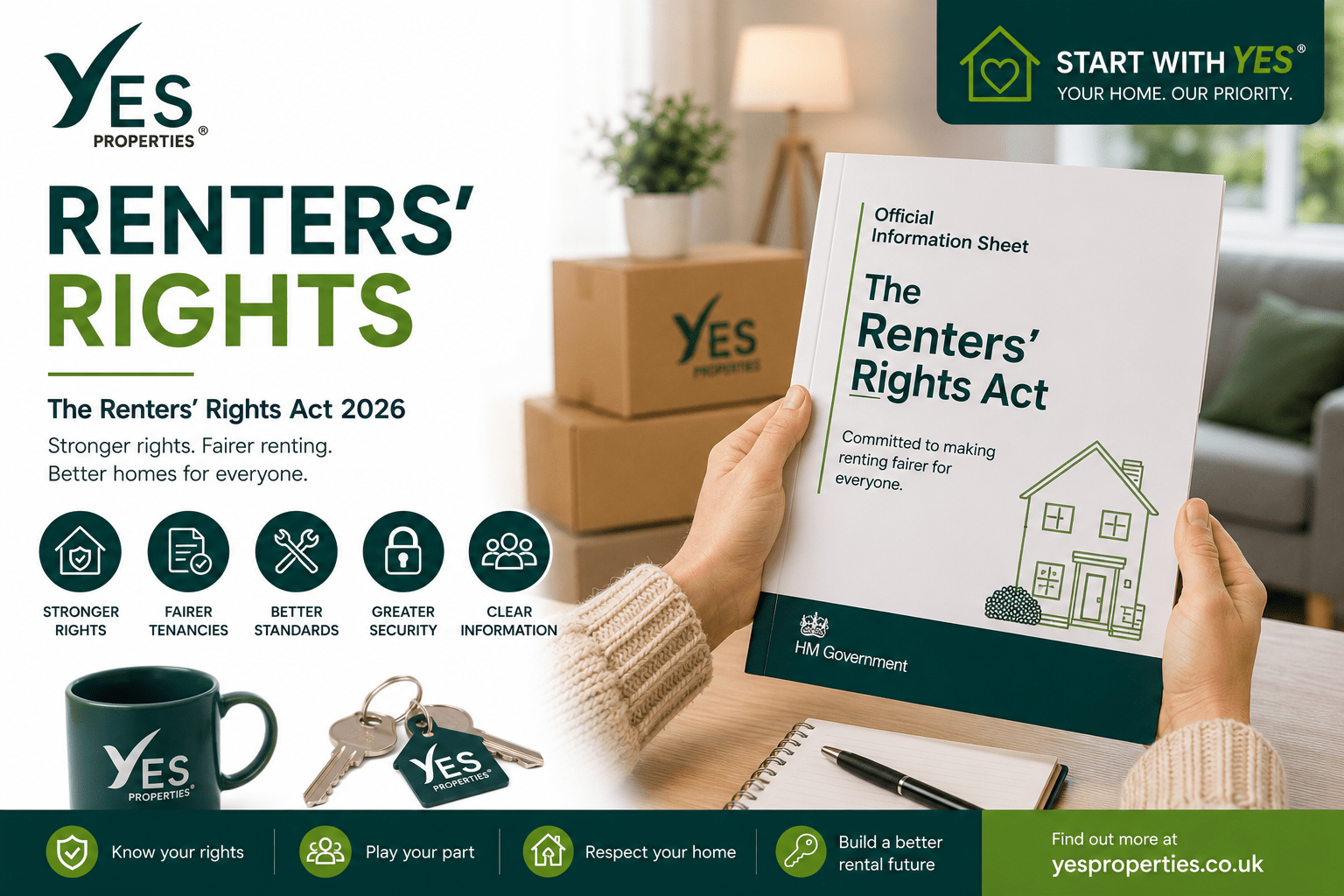
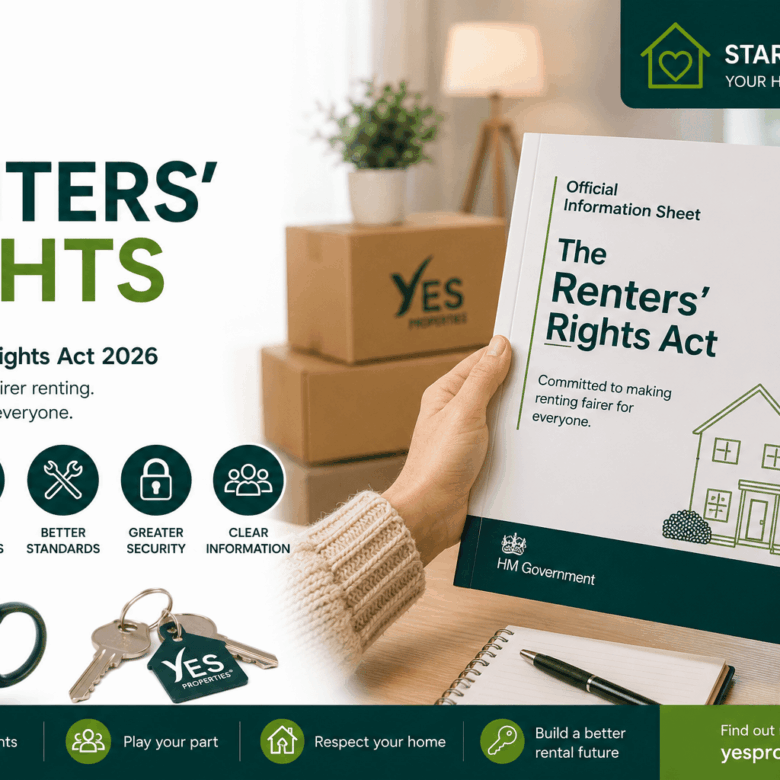
After the 31 May 2026, landlords and tenants can still refer to the Information Sheet to understand how their tenancy has changed due to the Renters’ Rights Act 2025.
Learn what happens at the end of your tenancy, including giving notice, the check-out inspection, returning keys, cleaning the property and getting your tenancy deposit back.
Learn how to report repairs in your rented property, what information to provide, how emergency repairs are handled and what happens after you report a maintenance issue.
Discover what happens after you move into your rented home, from setting up utilities and paying rent to reporting repairs, inspections and enjoying a successful tenancy.
Learn how tenancy deposits are calculated in England, the current legal deposit caps, when your deposit must be protected and how it is returned at the end of your tenancy.
Learn what happens during tenant referencing, what checks are carried out, how long the process usually takes and how you can help your application progress smoothly.
Viewing a property is one of the most exciting stages of finding your next home. It gives you the opportunity to explore the property in person, ask questions and decide whether it is the right fit for your needs.
Please enter your username or email address. You will receive a link to create a new password via email.
Manage Consent
To provide the best experiences, we use technologies like cookies to store and/or access device information. Consenting to these technologies will allow us to process data such as browsing behaviour or unique IDs on this site. Not consenting or withdrawing consent, may adversely affect certain features and functions.
Functional
Always active
The technical storage or access is strictly necessary for the legitimate purpose of enabling the use of a specific service explicitly requested by the subscriber or user, or for the sole purpose of carrying out the transmission of a communication over an electronic communications network.
Preferences
The technical storage or access is necessary for the legitimate purpose of storing preferences that are not requested by the subscriber or user.
Statistics
The technical storage or access that is used exclusively for statistical purposes.The technical storage or access that is used exclusively for anonymous statistical purposes. Without a subpoena, voluntary compliance on the part of your Internet Service Provider, or additional records from a third party, information stored or retrieved for this purpose alone cannot usually be used to identify you.
Marketing
The technical storage or access is required to create user profiles to send advertising, or to track the user on a website or across several websites for similar marketing purposes.