Our Residential Sales Agreement Explained
A Plain English Guide for Sellers
Selling your home is one of the biggest financial decisions you’ll ever make. Before we begin marketing your property, we’ll ask you to sign our Residential Sales Agency Agreement.
Like most legal documents, it contains formal language designed to protect both you and us. However, we understand that legal terminology isn’t always easy to read.
That’s why we’ve created this guide.
We’ll explain every important part of our agreement in simple English, using illustrations, practical examples and real-life scenarios so you know exactly what you’re signing.
This guide is intended to help you understand our agreement. It does not replace the signed Residential Sales Agency Agreement. If there is ever any difference between this guide and the signed agreement, the agreement itself will always take precedence.
What Is a Residential Sales Agency Agreement?
A Residential Sales Agency Agreement is the contract between you (the seller) and Yes Properties.
It sets out:
- The service you’ve instructed us to provide.
- Our responsibilities.
- Your responsibilities.
- How your property will be marketed.
- When commission becomes payable.
- How long the agreement lasts.
- How either party can end the agreement.
- What happens if a buyer is introduced.
Think of it as the instruction manual for the sale of your property.
Why Do We Need an Agreement?
A written agreement protects everyone involved.
It clearly explains:
✔ What we will do for you.
✔ What we won’t do.
✔ When fees become payable.
✔ How your property will be marketed.
✔ What happens if a buyer is introduced.
✔ How the agreement can end.
Without a written agreement, misunderstandings can arise far more easily.
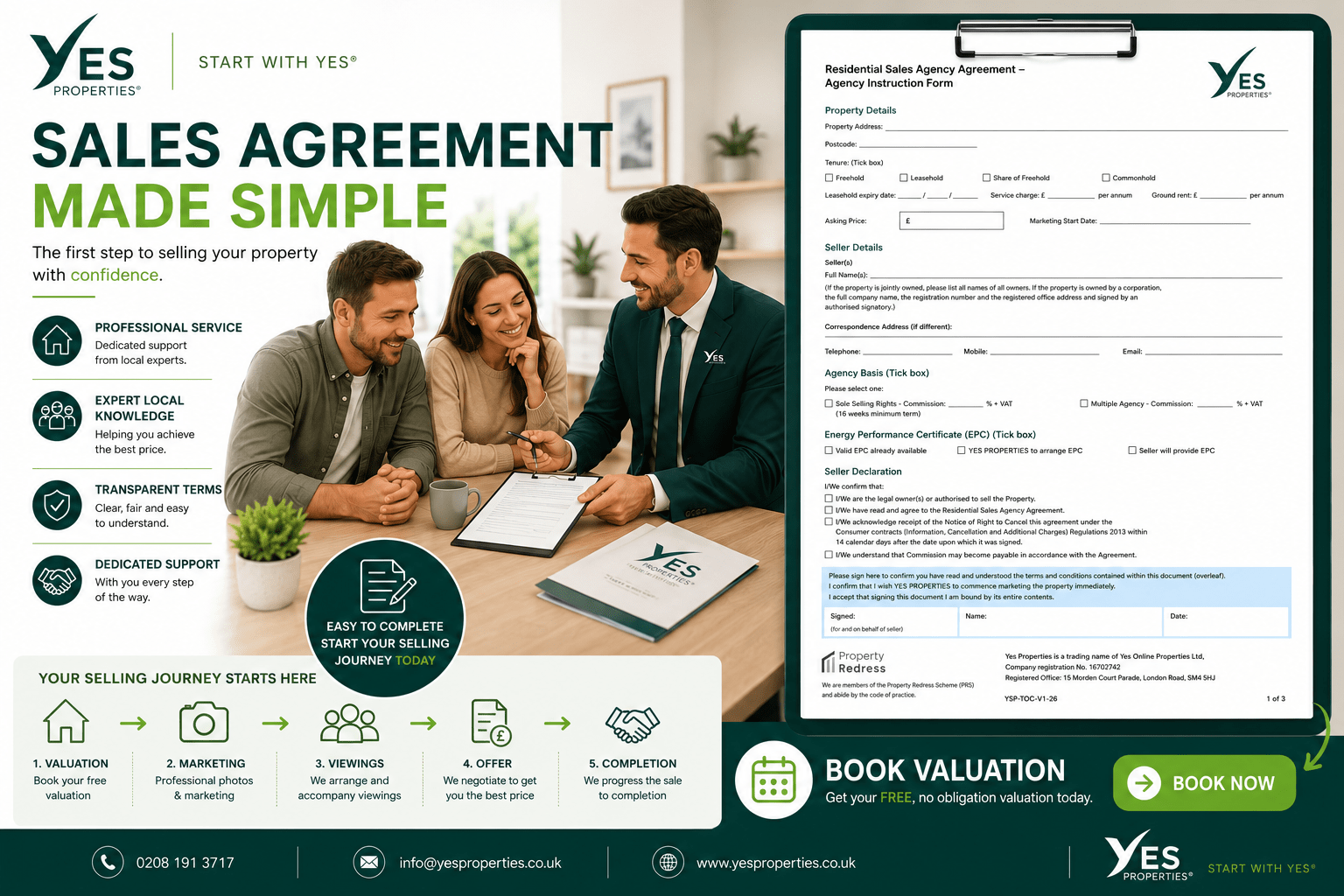
Understanding the Agency Instruction Form
The first page of our agreement is known as the Agency Instruction Form.
It records the key details of your instruction, including:
- Property address.
- Owner(s).
- Asking price.
- Property type.
- Agency basis.
- Commission.
- Marketing start date.
- Your contact details.
It forms the foundation of everything that follows and ensures we both have a clear record of what has been agreed.
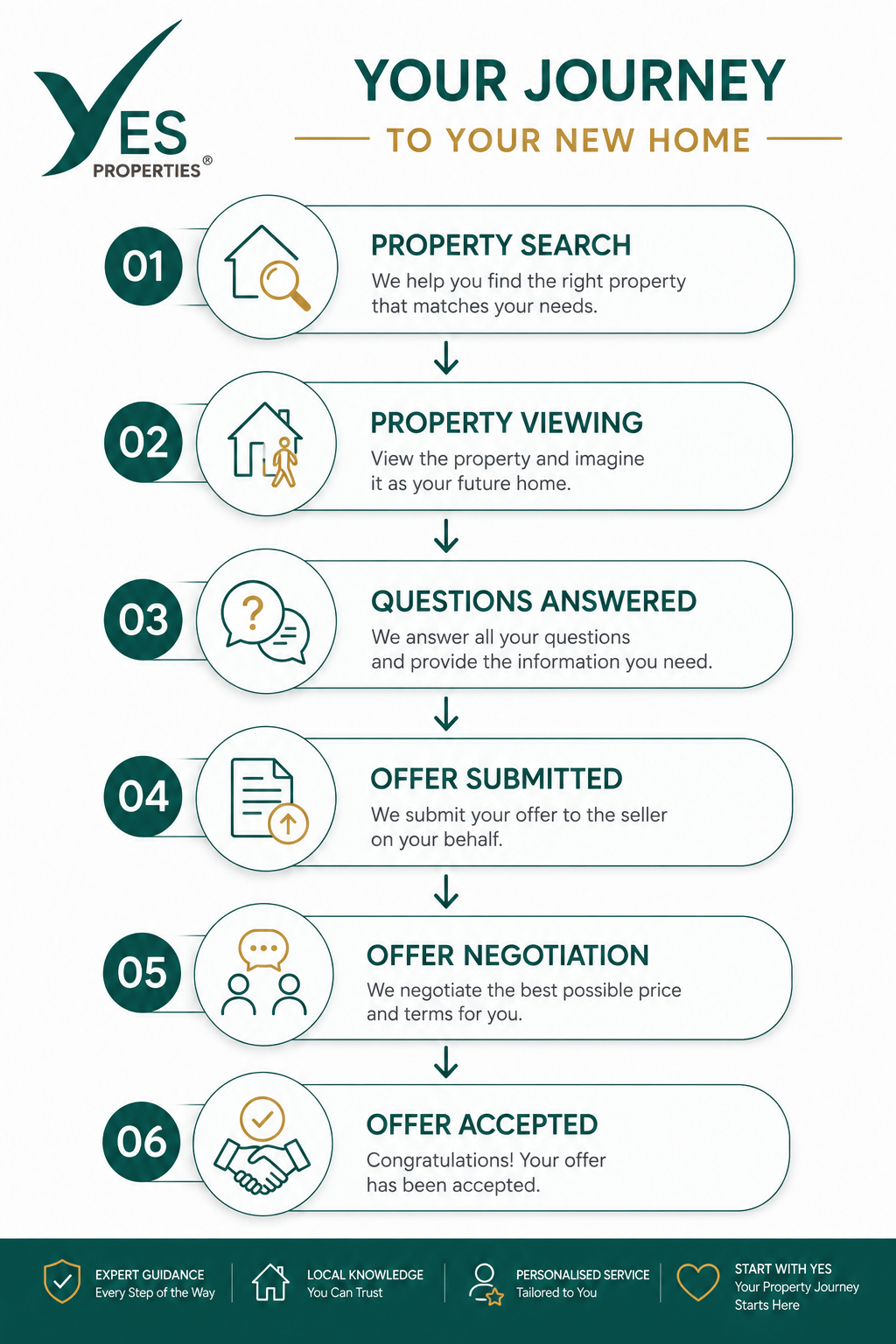
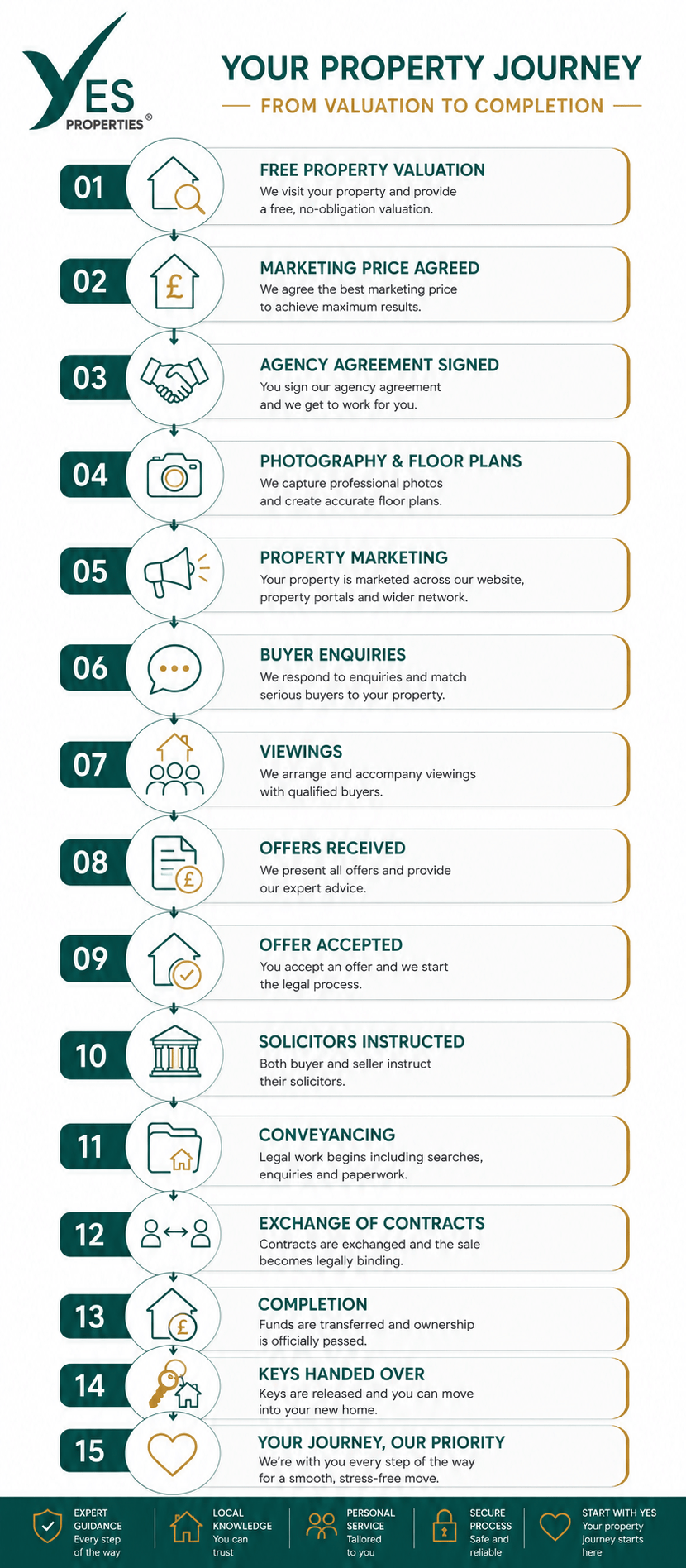
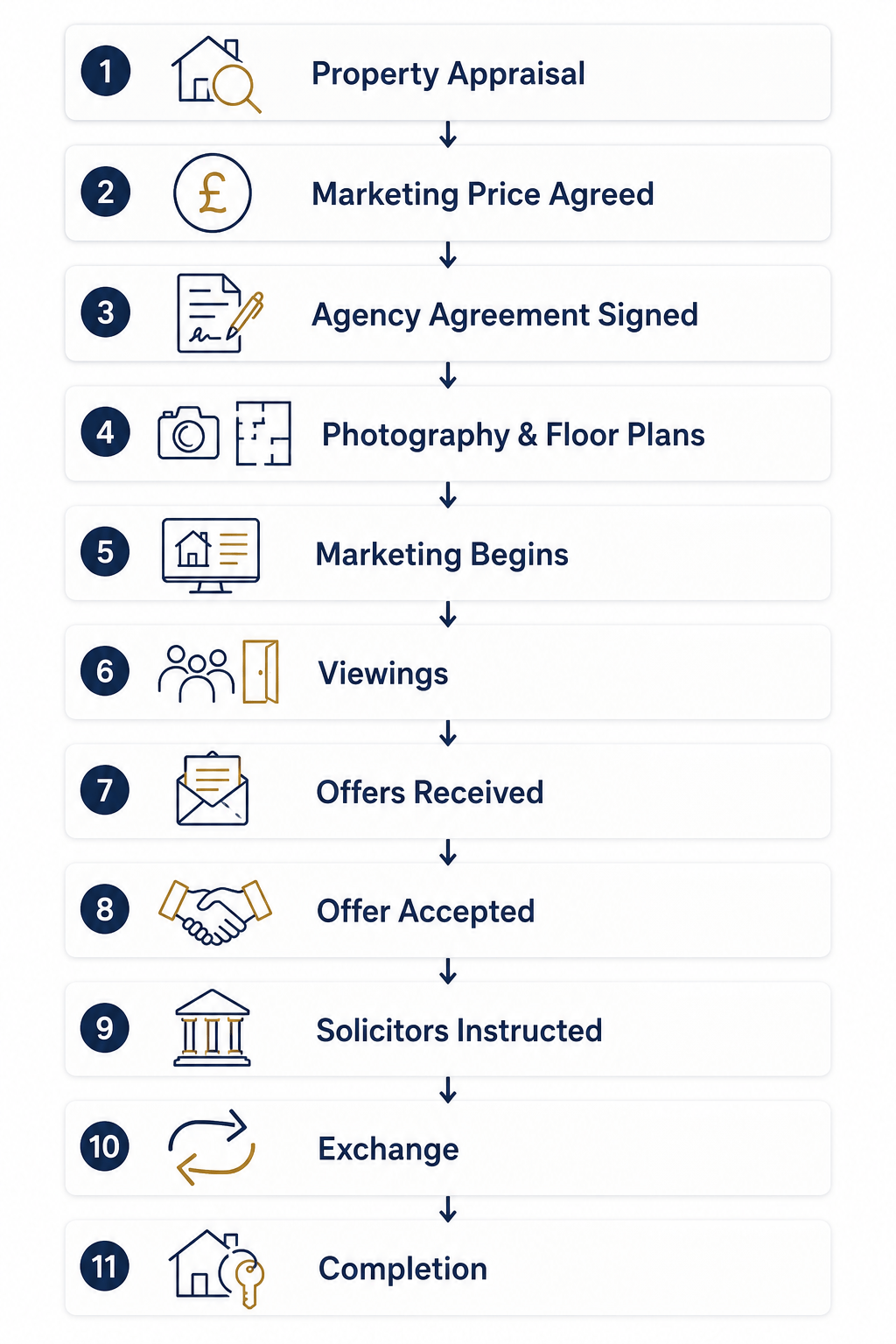
Your Selling Journey
Here’s an overview of the journey we’ll take together.
Choosing the Right Agency Basis
One of the most important parts of the agreement is selecting how you’d like us to act for you.
This affects how your property is marketed and how commission is earned.
The most common options are:
- Sole Agency
- Multiple Agency
- Sole Selling Rights (where specifically agreed)
Let’s look at each one.
Sole Agency
With a Sole Agency agreement, you appoint Yes Properties as your only estate agent for the agreed period.
This means:
✔ We carry out all marketing.
✔ We arrange all viewings.
✔ We negotiate offers.
✔ We progress the sale.
If another estate agent introduces the buyer during the sole agency period, this may affect your obligations under the agreement.
Example
You instruct Yes Properties.
We market your home.
We introduce a buyer.
The buyer purchases your property.
Our agreed commission becomes payable upon completion in accordance with the agreement.
Simple.
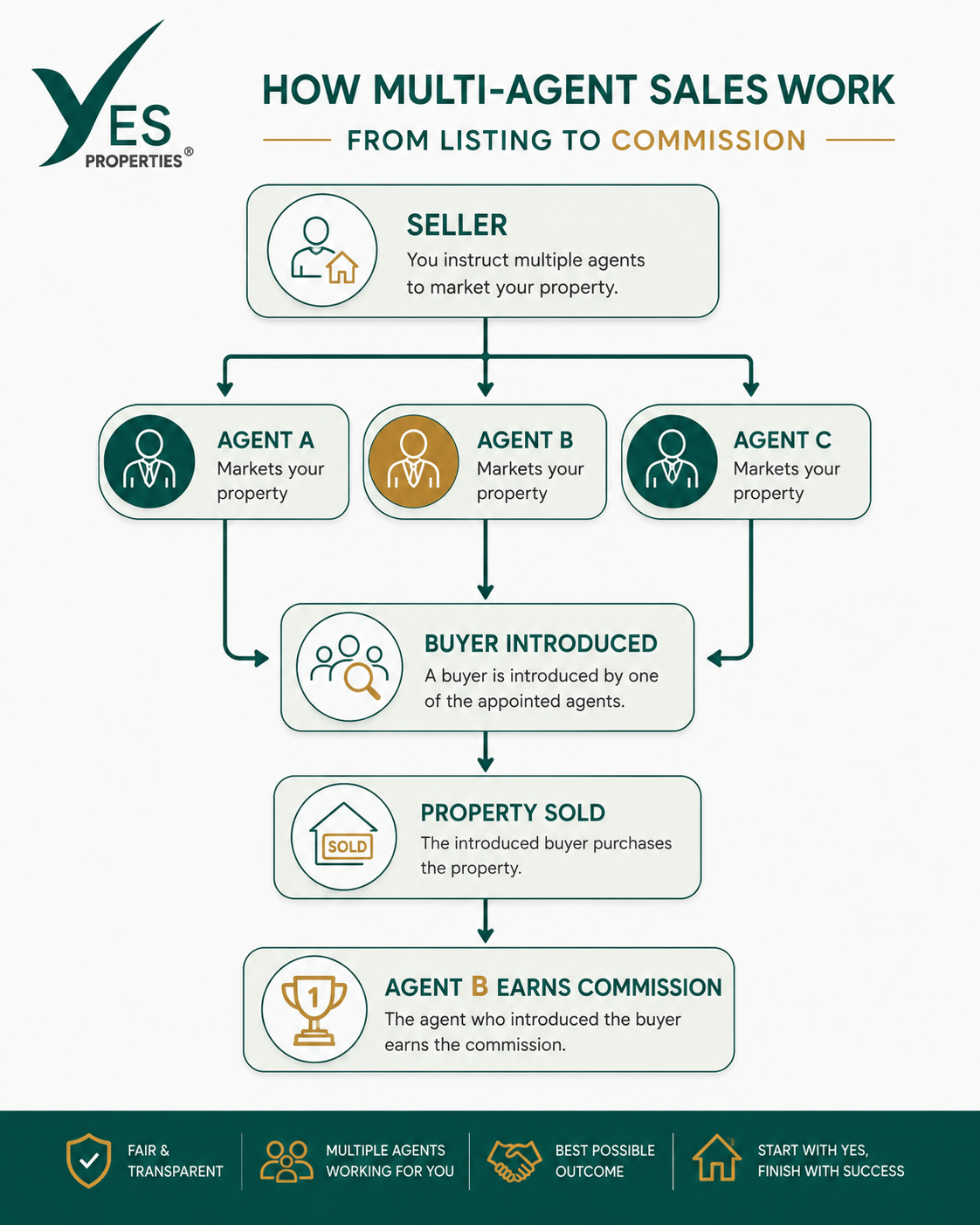
Multiple Agency
A Multiple Agency agreement allows you to instruct more than one estate agent at the same time.
This means:
- Several agents market your property.
- The agent who introduces the successful buyer usually earns the commission.
- Marketing costs and commission rates may differ.
Some sellers prefer wider exposure, while others prefer a single dedicated agent.
We’ll explain the advantages and disadvantages before you decide.
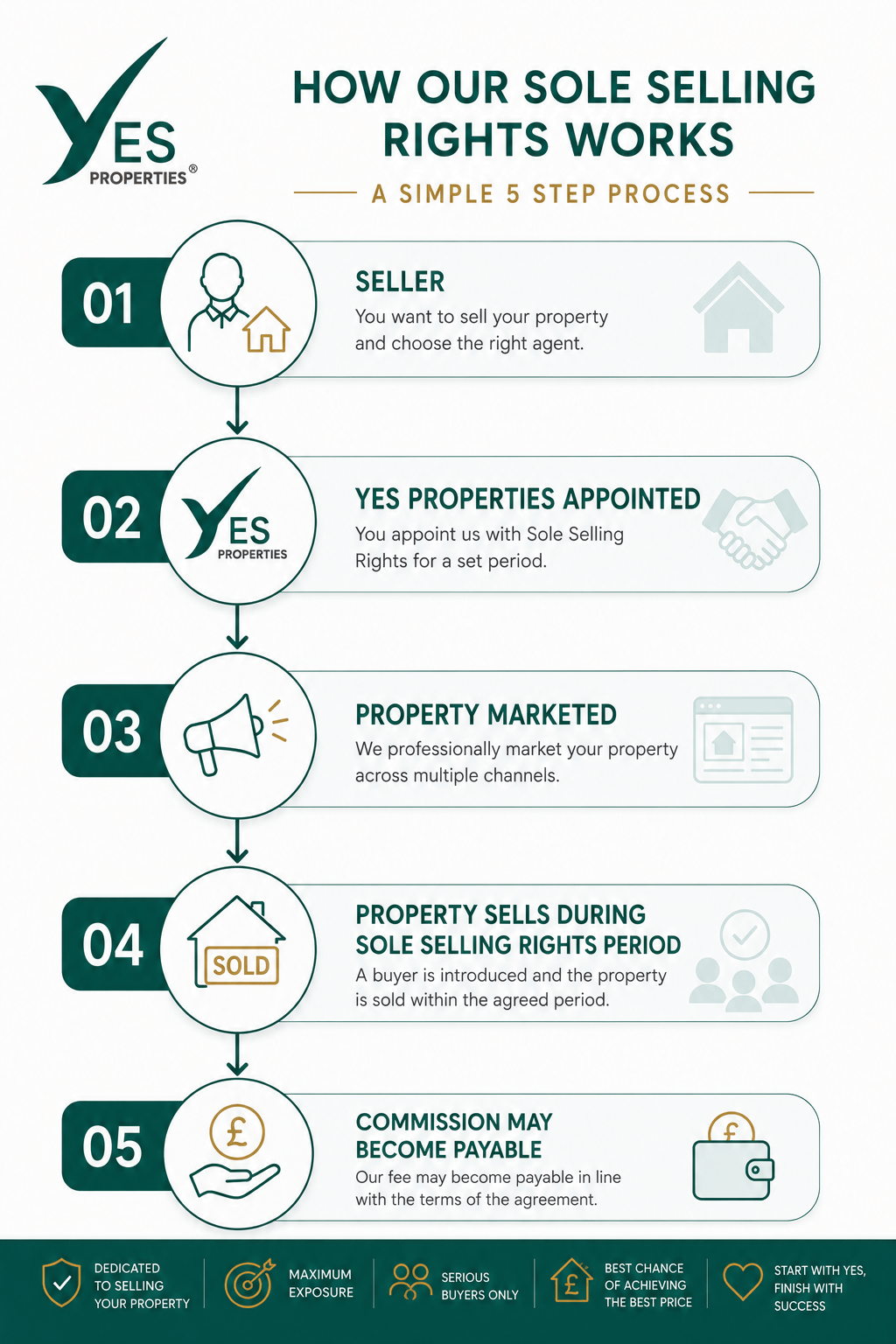
Sole Selling Rights
This is one of the most misunderstood terms in estate agency.
Under a Sole Selling Rights agreement, commission may become payable if your property is sold during the agreed period, even if the buyer was introduced by someone else or, in some circumstances, by you.
Because of its legal implications, we’ll always explain this arrangement carefully before asking you to agree to it.
Clause Explained: Sole Selling Rights provide a different level of exclusivity from Sole Agency. If this basis is proposed, we’ll ensure you fully understand how it works before you sign.
Why Do We Ask for Proof of Identity?
Many sellers wonder why estate agents request identification before marketing begins.
The answer is simple.
Estate agents are legally required to carry out identity checks and comply with Anti-Money Laundering (AML) regulations.
Typically, we’ll ask for:
- Passport or driving licence.
- Proof of address.
- Evidence of ownership (where appropriate).
These checks help protect everyone involved in the transaction.
Why Do We Ask So Many Questions About Your Property?
You may notice that we ask detailed questions about your property.
For example:
- Have you carried out any extensions?
- Are there planning permissions?
- Are there any disputes?
- Is the property leasehold?
- Has there been flooding?
- Are there guarantees?
- Are there rights of way?
- Are there service charges?
This isn’t because we’re being difficult.
It’s because today’s property market requires much greater transparency than ever before.
Providing accurate information early helps:
✔ Reduce delays.
✔ Avoid misunderstandings.
✔ Improve buyer confidence.
✔ Reduce the likelihood of sales falling through.
Material Information
You’ll hear us refer to Material Information.
This simply means information that could influence a buyer’s decision to purchase your property.
Examples include:
- Tenure.
- Council Tax.
- Flood risk.
- Parking arrangements.
- Restrictive covenants.
- Building works.
- Rights of way.
- Service charges.
- Ground rent.
- Planning permissions.
Providing this information at an early stage creates a smoother transaction for everyone.
Frequently Asked Questions
Why can’t we just start marketing immediately?
Before marketing begins, we’re required to complete certain legal and compliance checks. Taking a little time at the start can help avoid problems later in the sale.
Do I have to understand every legal clause?
No—but we encourage you to ask questions about anything you’re unsure of. That’s exactly why we’ve created this guide.
Can I change my agency basis later?
In many cases, yes. If your circumstances change, we’ll discuss the available options and explain how any changes may affect the agreement.
Why do you need to know about disputes or alterations?
Because buyers are entitled to receive accurate information before deciding whether to proceed. Early disclosure can help prevent delays and reduce the risk of a sale falling through.
YES Expert Tip: A successful property sale starts long before the first viewing. Completing the instruction paperwork accurately and providing full information at the outset helps us market your property confidently, answer buyers’ questions promptly and keep the transaction moving smoothly.
Our Residential Sales Agreement Explained
Part 2 – Marketing Your Property & Attracting the Right Buyers
Once you’ve instructed Yes Properties, the next stage is preparing your property for the market.
This is where first impressions become incredibly important.
Today’s buyers usually decide whether to arrange a viewing within seconds of seeing your property online. Great marketing doesn’t just make your property look attractive—it helps it stand out, generates more enquiries and can ultimately lead to better offers.
Our Residential Sales Agency Agreement authorises us to prepare professional marketing material and advertise your property through appropriate marketing channels on your behalf.
Step 1 – Preparing Your Property
Before we begin advertising, we’ll normally visit your property to prepare everything needed for a successful launch.
This may include:
- Professional photography
- Floor plan creation
- Property measurements
- Writing the property description
- Identifying key selling features
- Confirming Material Information
- Agreeing the asking price
- Planning the marketing strategy
Our objective is simple:
Present your property in the best possible light while ensuring all information remains accurate and compliant.
Why Professional Photography Matters
Professional photography is one of the most important investments in selling a property.
Most buyers begin their search online.
Before they read the description…
Before they check the location…
Before they look at the floor plan…
They look at the photographs.
Good photography encourages buyers to arrange a viewing.
Poor photography often causes buyers to scroll straight past.
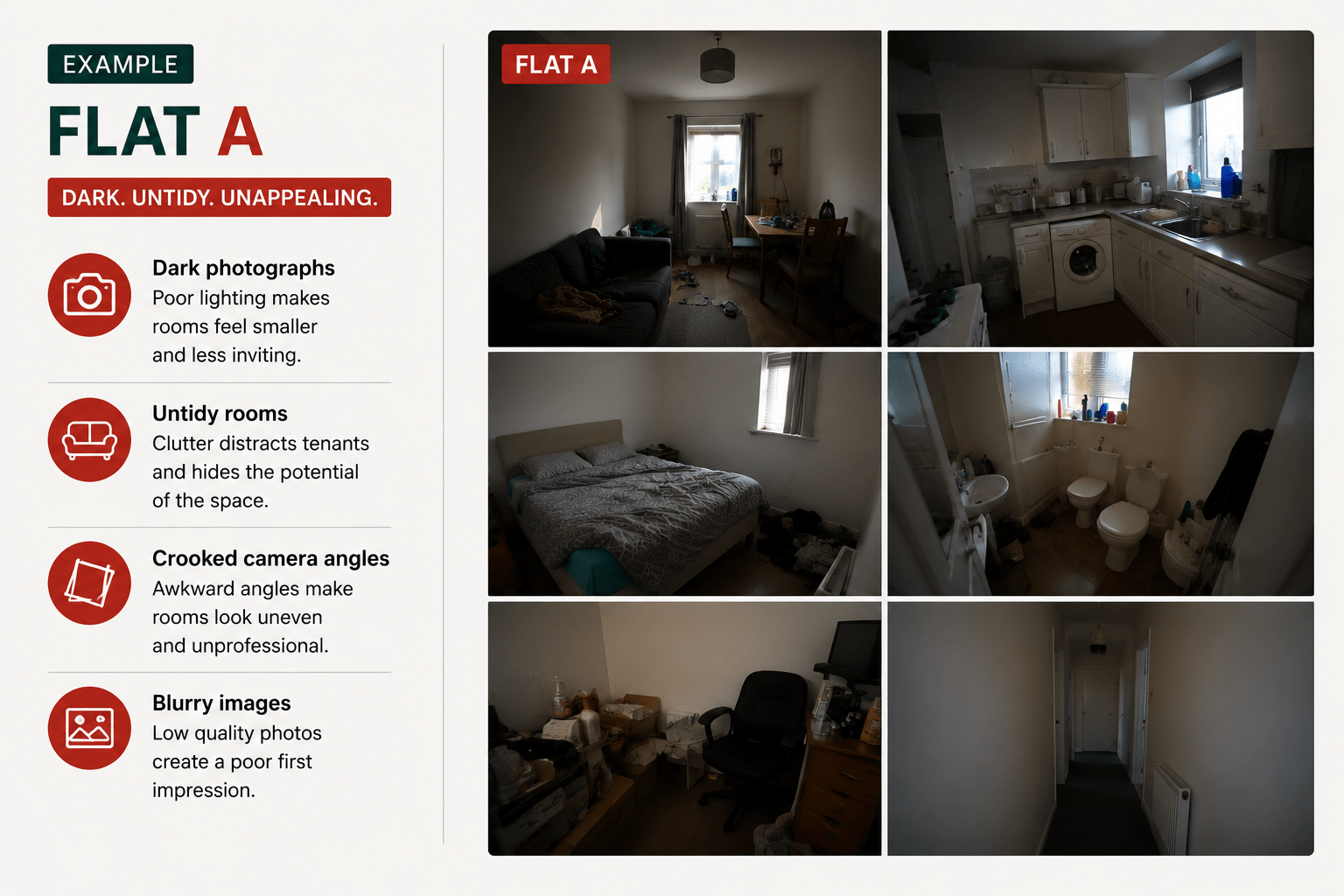
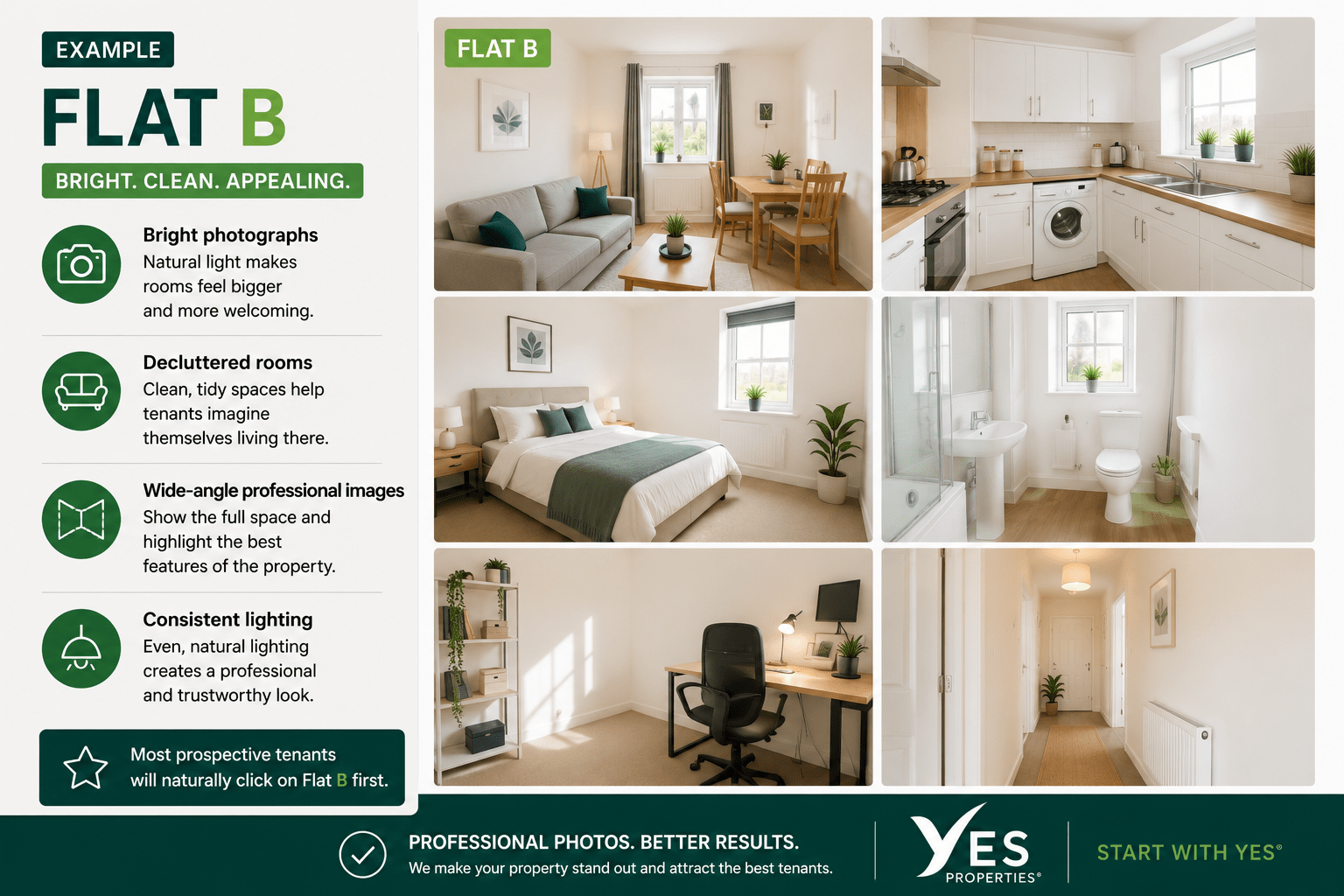
Example
Imagine two identical properties.
Property A
- Dark photographs
- Untidy rooms
- Crooked camera angles
- Blurry images
Property B
- Bright photographs
- Decluttered rooms
- Professional wide-angle images
- Consistent lighting
Although both properties are identical…
Most buyers will naturally click on Property B first.
This is why we recommend presenting every property professionally from day one.
Preparing Your Home for Photography
You don’t need expensive furniture or a complete refurbishment to create an excellent first impression.
Small improvements can make a significant difference.
We often recommend:
✔ Opening curtains and blinds.
✔ Turning on lights.
✔ Tidying worktops.
✔ Making beds.
✔ Removing unnecessary personal items.
✔ Cutting the lawn.
✔ Moving bins where possible.
✔ Parking cars away from the front elevation.
These simple steps help buyers focus on the property rather than distractions.
Floor Plans
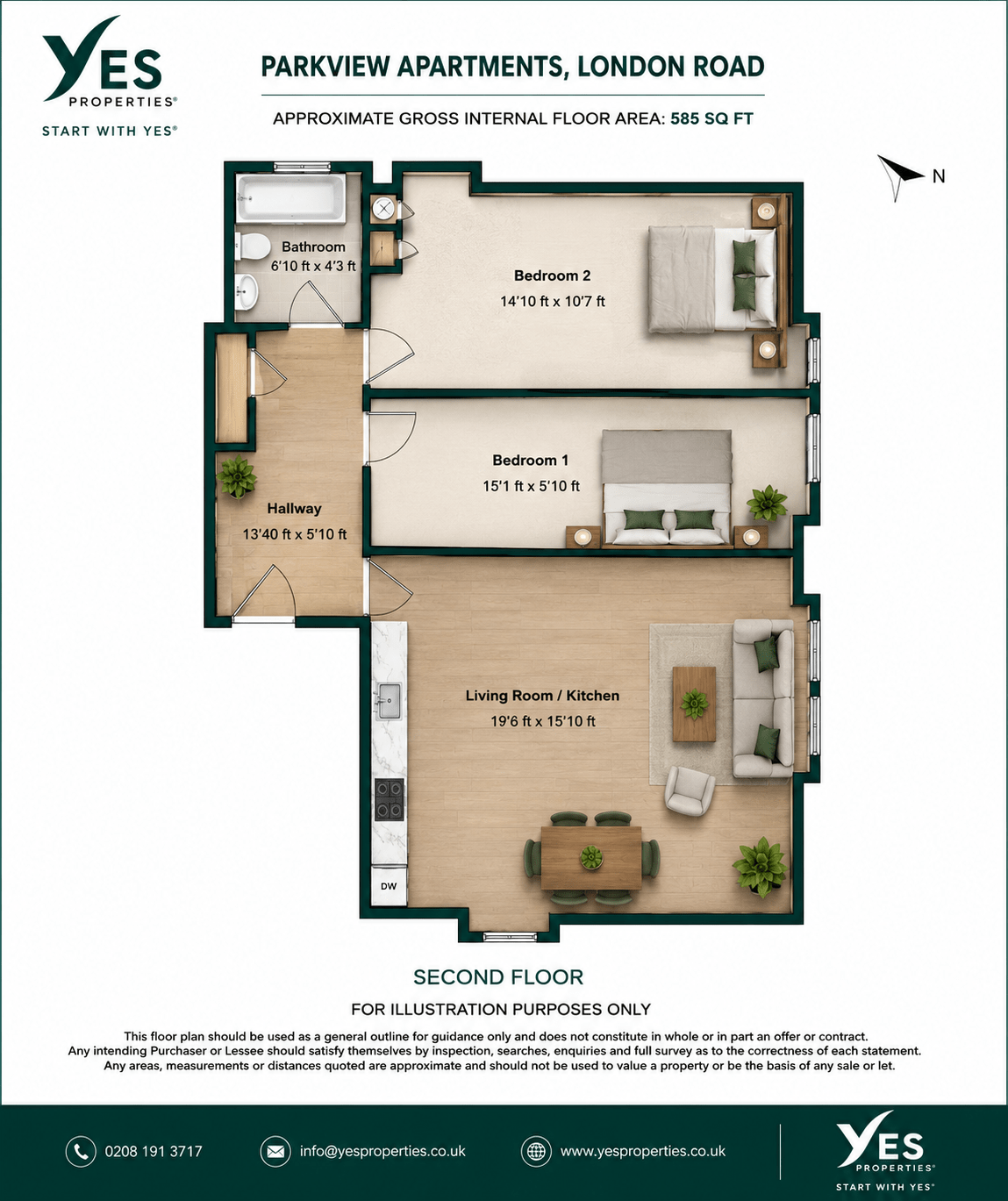
Buyers increasingly expect to see a floor plan before arranging a viewing.
A professionally prepared floor plan helps buyers understand:
- Room layout.
- Approximate room sizes.
- Flow between rooms.
- Storage.
- Overall accommodation.
Many buyers will decide whether a property suits their needs before reading the description simply by looking at the floor plan.
Why Floor Plans Matter
Imagine two listings.
The first only says:
“Three-bedroom semi-detached house.”
The second includes a professional floor plan.
Buyers can immediately understand:
- Which bedroom is largest.
- Where the kitchen is located.
- Garden access.
- Bathroom position.
- Reception room sizes.
This gives buyers much greater confidence before arranging a viewing.
Property Descriptions
Every property has a story.
Our job is to tell that story accurately while highlighting its strongest features.
Rather than simply listing rooms, we explain:
- Character.
- Lifestyle.
- Local amenities.
- Schools (where appropriate).
- Transport links.
- Parking.
- Outdoor space.
- Development potential.
- Recent improvements.
Good descriptions generate interest without exaggerating.
We believe accuracy is just as important as presentation.
Professional Floor Plans
Every floor plan we produce is professionally presented and designed to help buyers visualise the property.
They typically include:
- Room names.
- Approximate dimensions.
- Overall floor area.
- Direction indicator.
- Clear layout.
While measurements are approximate, they provide buyers with valuable guidance before arranging a viewing.
Video Tours & Drone Photography
Some homes benefit from additional marketing.
Where appropriate, we may recommend:
- Video walkthroughs.
- Cinematic property tours.
- Drone photography.
- Drone video.
- Lifestyle footage.
These services are particularly effective for:
- Larger homes.
- Country properties.
- Homes with substantial gardens.
- Premium properties.
- Homes with exceptional views.
Property Portals
Once everything has been prepared, your property is ready for launch.
Depending on your marketing package, your property may appear on:
- The Yes Properties website.
- Major UK property portals.
- Social media.
- Applicant mailing lists.
- Office window displays.
- Local marketing campaigns.
Our objective is to expose your property to the widest appropriate audience.
Social Media Marketing
Today’s buyers don’t only search property websites.
Many discover homes through social media.
Where appropriate, we may promote your property using:
- Facebook.
- Instagram.
- LinkedIn.
- Short-form video.
- Featured property campaigns.
This complements traditional portal advertising and can generate additional interest.
Window Displays
Although online marketing is now essential, traditional estate agency displays still play an important role.
Our office window showcases selected properties to:
- Local residents.
- Passing buyers.
- Investors.
- People relocating into the area.
Many successful sales still begin with someone spotting a property in an estate agent’s window.
For Sale Boards
A professionally positioned For Sale board remains one of the most effective forms of local advertising.
Benefits include:
- Increased local exposure.
- Neighbour recommendations.
- Passing traffic.
- Local enquiries.
With your permission, we’ll arrange installation and removal at the appropriate stages of the sale.
Viewings
Once enquiries begin arriving, we’ll arrange viewings with prospective buyers.
Whenever possible, we recommend accompanied viewings.
This allows us to:
- Present your property professionally.
- Answer buyers’ questions immediately.
- Highlight key selling points.
- Gather valuable feedback.
- Qualify buyer interest.
Viewing Feedback
Every viewing provides useful information.
Following viewings, we’ll usually discuss:
- Buyer impressions.
- Positive comments.
- Areas of concern.
- Likelihood of an offer.
- Suggestions to improve marketing if necessary.
This feedback helps us continually refine the marketing strategy where appropriate.
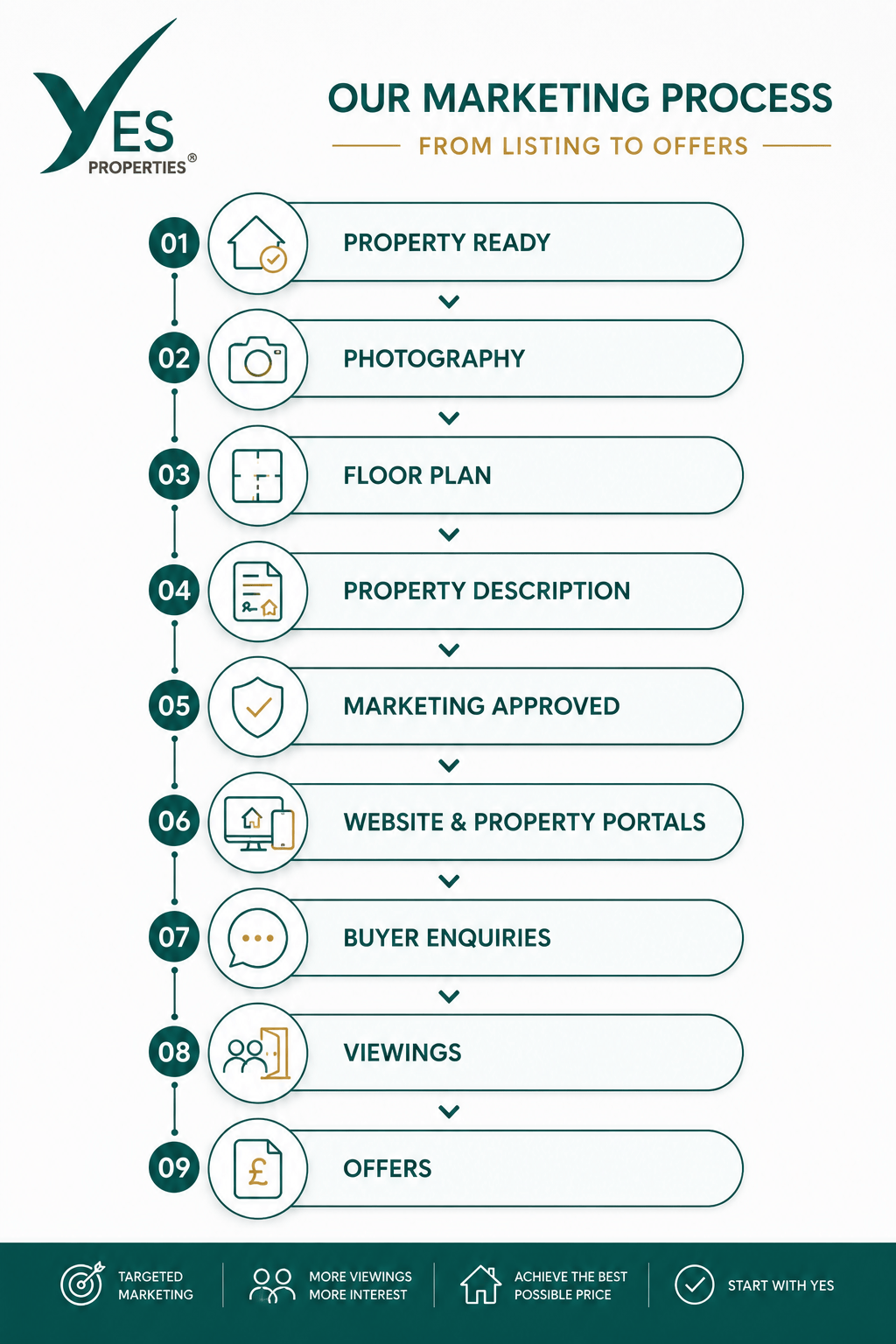
Marketing Timeline
Frequently Asked Questions
Who owns the photographs?
Professional photographs, floor plans, videos and other marketing materials created by or for Yes Properties remain our intellectual property. This allows us to market your property effectively and showcase examples of our work, while your ownership of the property itself is unaffected.
Can I use my own photographs?
You’re welcome to discuss this with us. However, professionally produced images generally create a stronger first impression and are more likely to attract serious buyers.
Can I approve my advert before it goes live?
Absolutely.
We’ll provide you with draft marketing particulars so you can check the accuracy of the information before publication. We always encourage sellers to review descriptions, room details and property information carefully.
Can I delay marketing?
Yes. If you need additional time to prepare your property, we’ll agree a suitable marketing launch date with you.
Should I carry out repairs before marketing?
Not always.
Some improvements can enhance presentation, while others may not significantly increase the sale price. During your appraisal, we’ll advise which improvements are likely to provide the greatest benefit.
YES Expert Tip: Buyers often decide whether to book a viewing within the first few seconds of seeing an online listing. High-quality photography, accurate floor plans and a well-written description work together to create a strong first impression that encourages more enquiries and better-quality viewings.
Our Residential Sales Agreement Explained
Part 3 – Offers, Negotiations & Agreeing a Sale
Receiving an offer is one of the most exciting stages of selling a property, but it’s also where experience and careful negotiation can make a significant difference.
The highest offer isn’t always the best offer.
Our role is to help you understand every offer you receive, verify the buyer’s position and negotiate the best overall outcome for you.
Throughout the process, every offer received will be communicated to you promptly (unless you have instructed us otherwise), allowing you to make an informed decision.
The Buyer’s Journey
Before making an offer, a buyer has usually completed several steps.
Understanding where a buyer is on this journey helps us assess how serious they are.
Receiving an Offer
When someone wishes to buy your property, they will usually submit an offer through us.
An offer will normally include:
- Purchase price
- Buyer’s full name
- Buying position
- Mortgage or cash purchase
- Deposit available
- Preferred completion timescale
- Whether there is a property chain
We will discuss all of this with you before you decide how to respond.
Do I Have to Accept the Highest Offer?
Not necessarily.
Price is important, but so is the buyer’s ability to proceed.
For example:
Buyer A
£610,000
Needs to sell their own property.
Hasn’t instructed a solicitor.
No mortgage agreed.
Buyer B
£605,000
Cash buyer.
No chain.
Proof of funds provided.
Ready to exchange quickly.
Although Buyer A has offered more, Buyer B may present a lower overall risk.
Sometimes certainty is worth more than a slightly higher price.
Understanding Different Types of Buyers
Every buyer is different.
The most common categories are:
First-Time Buyers
Advantages:
✔ No property to sell.
✔ Often chain-free.
✔ Usually motivated.
Things to check:
- Mortgage agreed?
- Deposit available?
- Solicitor instructed?
Home Movers
These buyers are selling one property in order to purchase another.
Advantages:
- Usually experienced.
Considerations:
- Dependent on selling their own home.
- Chain may become longer.
Cash Buyers
Cash buyers do not require a mortgage.
Advantages:
- No mortgage valuation.
- Potentially quicker transaction.
- Fewer third parties involved.
However…
Always remember:
Cash buyers still need proof that funds are genuinely available.
Buy-to-Let Investors
These buyers are purchasing as an investment.
They may:
- Buy with cash.
- Use specialist mortgages.
- Already own several properties.
Investors often move quickly but may negotiate firmly.
Agreement in Principle (AIP)
If a buyer requires a mortgage, one of the first things we’ll ask is whether they have an Agreement in Principle (AIP).
An Agreement in Principle is an indication from a lender that they may be prepared to lend a certain amount, subject to full application and checks.
It is not a mortgage offer.
However, it demonstrates that the buyer has already begun the mortgage process.
Proof of Funds
Before recommending acceptance of an offer, we’ll usually seek evidence that the buyer has the necessary funds.
Examples include:
- Bank statements.
- Savings statements.
- Mortgage Agreement in Principle.
- Investment account statements.
- Confirmation from a solicitor.
This helps reduce the likelihood of problems later.
Why We Verify Buyers
One of our responsibilities is helping you understand how proceedable a buyer is.
We may ask questions such as:
- Have they sold their property?
- Is their buyer confirmed?
- Have they instructed a solicitor?
- Do they have mortgage finance?
- Can they provide proof of deposit?
This information helps you make an informed decision.
Negotiating the Best Outcome
Negotiation isn’t simply about increasing the price.
Sometimes it involves improving:
- Completion date.
- Chain position.
- Deposit availability.
- Flexibility.
- Included fixtures and fittings.
Our objective is always to achieve the strongest overall package for you.
Example
Imagine your property is advertised for £650,000.
Buyer 1 offers:
£640,000
Buyer 2 offers:
£645,000
Buyer 3 offers:
£650,000
Rather than immediately recommending Buyer 3, we’ll look at:
✔ Buying position
✔ Mortgage status
✔ Chain
✔ Timescale
✔ Ability to proceed
Sometimes the strongest buyer isn’t simply the highest bidder.
Best and Final Offers
Occasionally, several buyers may wish to purchase the same property.
Where appropriate, we may recommend inviting interested parties to submit their Best and Final Offer.
This means each buyer is given one opportunity to submit their strongest offer by a specified deadline.
The seller then decides which offer to accept.
This process aims to be transparent and fair while helping you achieve the best overall outcome.
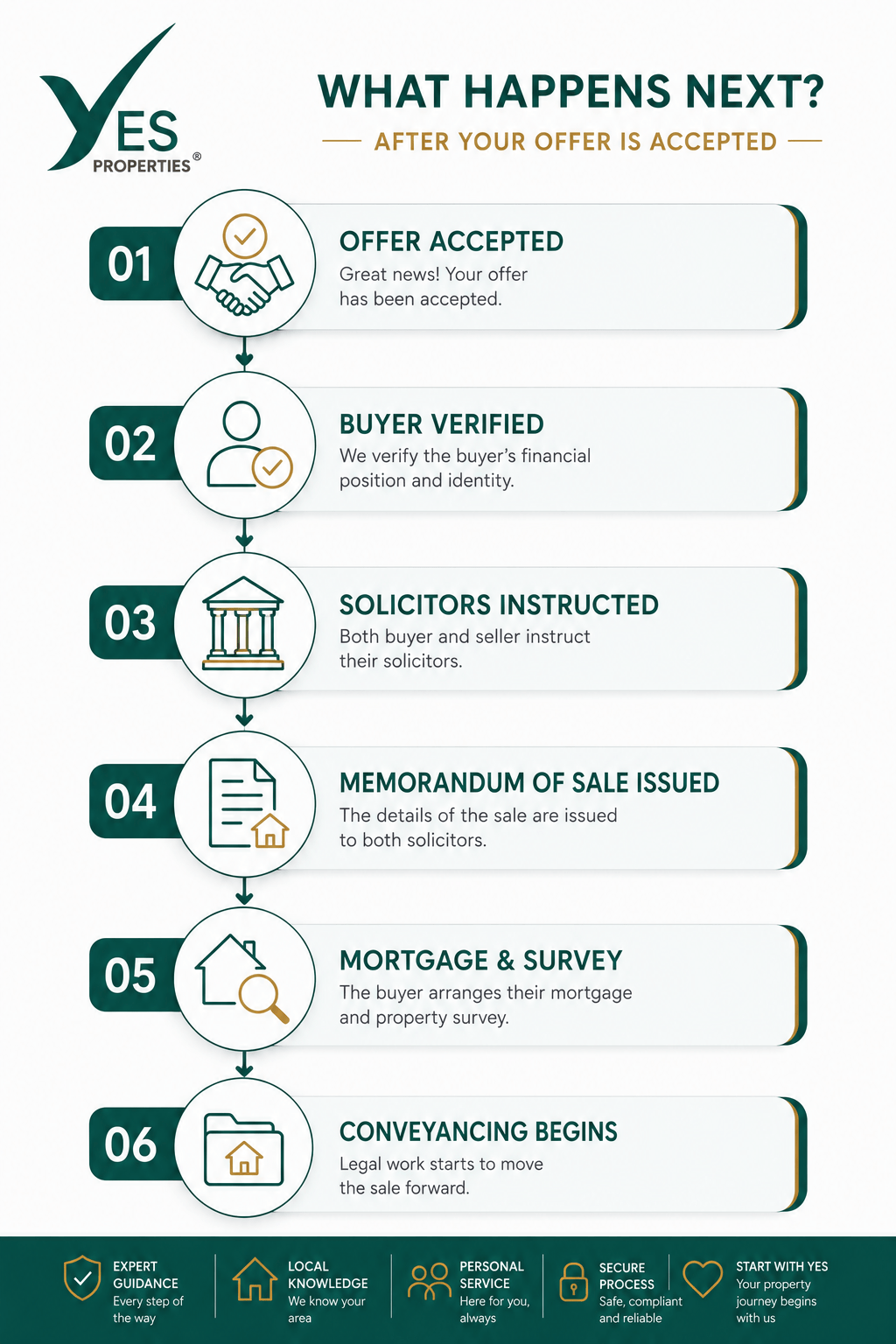
What Happens After I Accept an Offer?
Accepting an offer does not normally create a legally binding contract.
The next stage begins.
The sale only becomes legally binding later in the transaction when contracts are exchanged.
What Is a Memorandum of Sale?
Once you’ve accepted an offer, we’ll prepare a Memorandum of Sale.
This document is sent to:
- Your solicitor.
- The buyer’s solicitor.
- You.
- The buyer.
It normally confirms:
- Agreed purchase price.
- Property address.
- Buyer details.
- Seller details.
- Solicitors acting.
- Special conditions.
- Fixtures and fittings (where agreed).
This allows the legal work to begin.
Sales Progression
Many people assume an estate agent’s job ends when an offer is accepted.
In reality, one of the most important stages is only just beginning.
We’ll continue helping to progress the sale by communicating with:
- Buyer.
- Seller.
- Both solicitors.
- Mortgage broker (where appropriate).
- Surveyor (where appropriate).
Our aim is to keep everyone informed and help minimise unnecessary delays.
Why Do Sales Fall Through?
Unfortunately, not every agreed sale reaches completion.
Common reasons include:
- Mortgage refused.
- Survey problems.
- Buyer changes their mind.
- Chain collapse.
- Legal issues.
- Delays causing one party to withdraw.
Early communication and proactive sales progression can often help identify and resolve issues before they become major problems.
Frequently Asked Questions
Can I reject an offer?
Yes.
As the seller, you’re under no obligation to accept any offer. We’ll provide advice, but the final decision is always yours.
Can I accept an offer below the asking price?
Absolutely.
The asking price is an invitation for offers. You may accept, reject or negotiate any offer you receive.
Can I change my mind after accepting an offer?
Until contracts are exchanged, either party may generally withdraw, although doing so can have practical consequences. We’ll explain the implications if your circumstances change.
What is gazumping?
Gazumping occurs when a seller accepts a higher offer from another buyer before contracts have been exchanged.
What is gazundering?
Gazundering occurs when a buyer reduces their offer shortly before exchange of contracts.
While uncommon, both situations highlight why progressing the transaction efficiently is important.
Will you negotiate on my behalf?
Yes.
We’ll discuss every offer with you, explain the buyer’s position and negotiate in accordance with your instructions.
YES Expert Tip: The best buyer isn’t always the one offering the highest price. A well-qualified buyer with finance in place, no chain and an experienced solicitor can often deliver a smoother and more successful transaction than a higher offer from someone who isn’t ready to proceed.
Our Residential Sales Agreement Explained
Part 4 – Estate Agent Commission Explained
One of the questions we’re asked most often is:
“Exactly when do I pay the estate agent?”
It’s a fair question, and one that every seller should understand before signing an agency agreement.
In this chapter, we’ll explain how commission works, when it becomes payable, the difference between Sole Selling Rights and Multiple Agency, and some of the terms that often cause confusion.
Our aim is complete transparency—so there are no surprises later in the selling process.
What Is Estate Agent Commission?
Commission is the agreed fee you pay us for successfully introducing a buyer who goes on to purchase your property in accordance with the terms of our agreement.
Rather than charging a large upfront fee, estate agents are generally paid when a successful sale reaches completion and the agreed entitlement under the agency agreement has arisen. The percentage and agency basis are recorded in your Agency Instruction Form.
When Does Commission Become Payable?
A common misconception is that commission becomes payable simply because your property has been advertised.
It doesn’t.
Instead, commission becomes payable only when the circumstances described in the signed agreement have occurred.
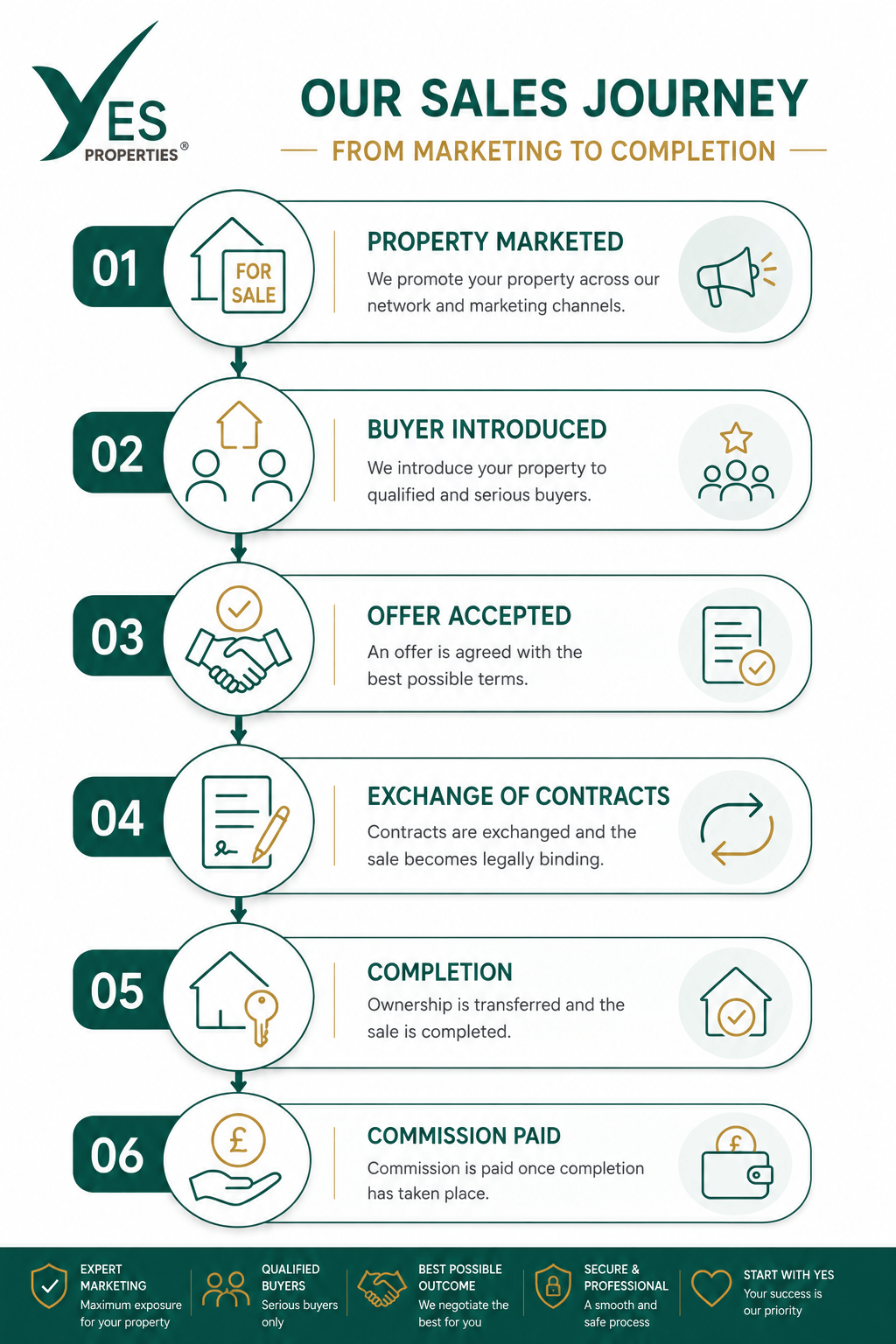
In most successful transactions the sequence looks like this:
The precise entitlement depends on the agency basis you’ve chosen and the terms of your agreement.
How Is Commission Calculated?
Your commission is normally calculated as the agreed percentage of the final sale consideration, plus VAT where applicable.
For example:
Sale Price: £600,000
Agreed Fee: 2%
Commission:
£600,000 × 2%
= £12,000 + VAT
Your exact fee is shown in your signed Agency Instruction Form.
Sole Selling Rights Explained
This is one of the most misunderstood clauses in estate agency.
Under a Sole Selling Rights agreement, you’re appointing Yes Properties exclusively for the agreed minimum term.
In simple terms:
Unlike a standard multiple agency arrangement, Sole Selling Rights can mean commission becomes payable in circumstances set out in the agreement even if another person introduced the buyer during the Sole Selling Rights period. For that reason, we’ll always explain this clause carefully before you sign.Clause Explained: Sole Selling Rights offer the highest level of exclusivity. We never want a seller to sign this clause without fully understanding how it operates.
Multiple Agency Explained
A Multiple Agency agreement allows you to instruct more than one estate agent at the same time.
Typically, the commission is earned by the agent who introduced the successful purchaser.
Example:
Your agreement explains when commission becomes payable under a Multiple Agency instruction.
What Is an Introduced Buyer?
Another phrase you may see in an estate agency agreement is “introduced purchaser.”
This simply means a buyer whose interest in your property can reasonably be traced back to our marketing or negotiations.
For example:
- They responded to our advert.
- They attended a viewing arranged by us.
- They contacted us directly about your property.
- We negotiated with them on your behalf.
Whether a buyer is regarded as “introduced” depends on the facts and the wording of the agreement.
Protected Buyers
Sometimes a seller decides to change estate agents after marketing has already begun.
If we introduced a buyer during our instruction and that same buyer later purchases the property, our agreement may continue to protect our entitlement to commission in the circumstances set out in the contract.
This protects the work already carried out by the agent in introducing the purchaser.
Dual Fee Liability
Nobody wants to pay two estate agents.
That’s why it’s important to understand your agency basis before signing.
Dual fee situations most commonly arise where:
- Two different agents each claim to have introduced the successful purchaser.
- A seller changes agents without understanding the continuing rights under the first agreement.
We’ll always explain how to minimise the risk of this happening before you instruct us.
What Happens if I Find My Own Buyer?
This depends entirely on the type of agreement you’ve signed.
For example:
Under Some Agency Agreements
You may be able to sell to your own buyer without paying commission.
Under Sole Selling Rights
Different provisions may apply.
Rather than assuming, always ask us.
We’ll explain exactly how your chosen agreement works before marketing begins.
What Happens if I Withdraw My Property?
Sometimes circumstances change.
You may decide:
- Not to move.
- To renovate instead.
- To delay the sale.
- To keep the property.
Withdrawing your property from the market is different from completing a sale.
Any consequences depend on:
- Your agreement.
- The notice provisions.
- Whether a purchaser has already been introduced.
- Whether any commission entitlement has already arisen.
We’ll always explain the relevant clauses if your plans change.
Minimum Term Explained
Most estate agency agreements include a minimum instruction period.
This gives your agent a reasonable opportunity to market the property properly and recover the investment made in photography, advertising, viewings and negotiation.
Your Residential Sales Agency Agreement currently provides for a 16-week minimum term, followed by termination on written notice in accordance with the agreement.
Can I Cancel My Agreement?
Yes.
Your agreement explains how either party may bring the agency agreement to an end.
If the agreement was entered into away from our business premises or by distance means, you may also have statutory cancellation rights under consumer legislation. A separate Notice of Right to Cancel forms part of your paperwork.
Frequently Asked Questions
Do I pay commission if my property doesn’t sell?
Generally, commission is linked to the circumstances set out in the signed agreement. If no commission entitlement arises under those terms, no sales commission is usually payable.
Can I negotiate the fee?
Yes.
The commission percentage is agreed before marketing begins and recorded in the Agency Instruction Form.
Who pays the commission?
The seller pays the agreed estate agency commission unless another arrangement has been agreed in writing.
Is VAT included?
Commission is quoted plus VAT unless expressly stated otherwise in the agreement.
Why do estate agents charge commission rather than a fixed fee?
A commission-based model aligns the agent’s interests with yours. The better the sale outcome, the more successful the transaction is for both parties.
Common Misunderstandings
❌ “The highest fee means the best service.”
Not necessarily. Experience, communication and negotiation skills often have a greater impact on the outcome.
❌ “Commission is payable as soon as I accept an offer.”
No. Accepting an offer and becoming liable for commission are different concepts. Your entitlement and payment obligations are governed by the signed agreement.
❌ “Changing agents automatically removes the first agent’s rights.”
Not always. Depending on the agreement and the circumstances, continuing rights may still apply in relation to buyers previously introduced.
❌ “I don’t need to read the commission clause.”
This is one of the most important parts of the agreement. If you’re unsure about anything, ask us—we’ll explain it in plain English before you sign.
YES Expert Tip: We believe there should never be any uncertainty about fees. Before you instruct us, we’ll explain your chosen agency basis, commission structure, minimum term and cancellation rights so you know exactly how the agreement works.
Our Residential Sales Agreement Explained
Part 5 – Exchange, Completion & The Final Stages of Your Sale
Congratulations!
By this stage, you’ve accepted an offer, both solicitors have been instructed and the legal work is underway.
Many sellers believe the hard work is over once an offer has been accepted. In reality, one of the most important phases of the transaction is just beginning.
This final chapter explains what happens between accepting an offer and handing over the keys, together with the final parts of our Residential Sales Agency Agreement.
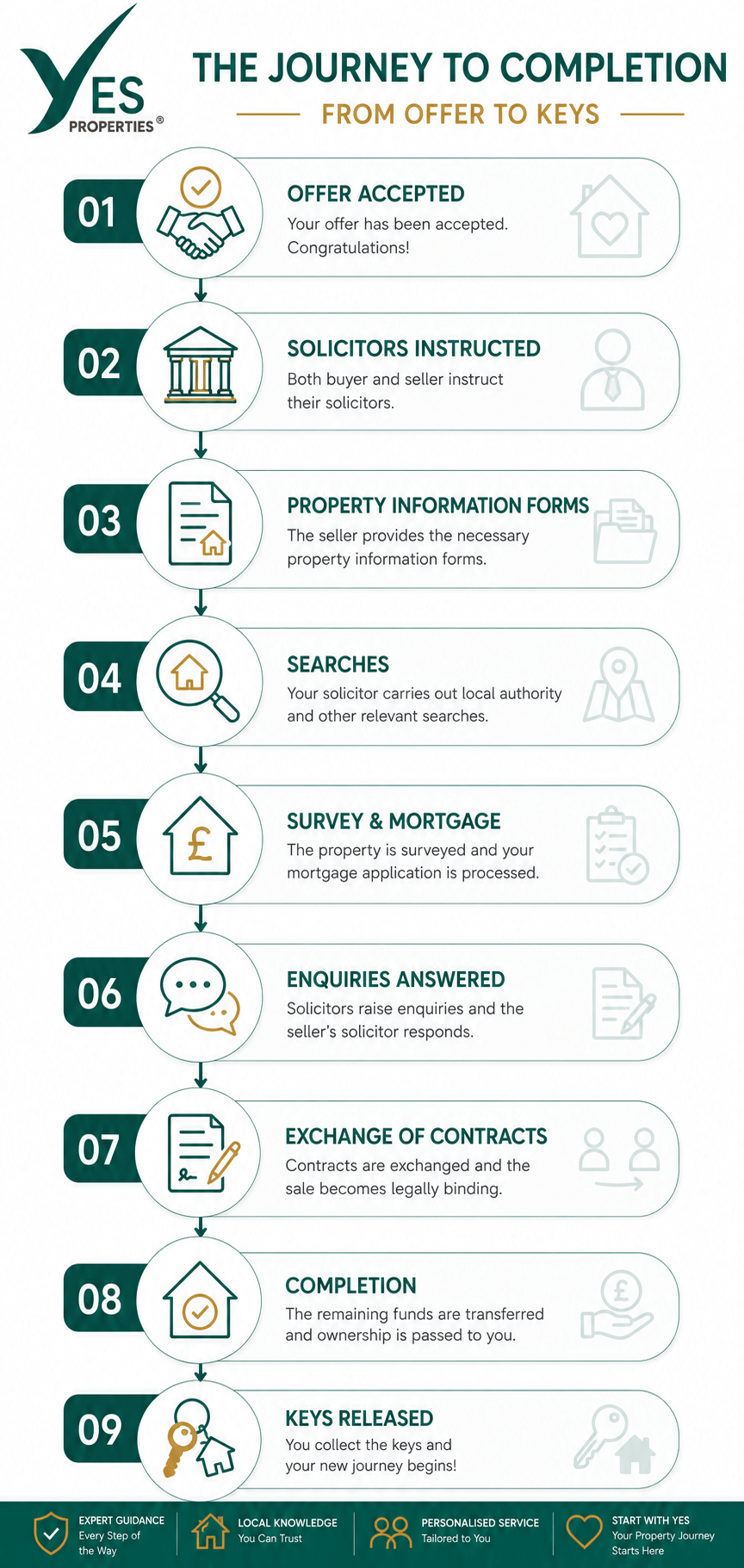
The Legal Journey
Once an offer has been accepted, the transaction usually follows this path.
This process can take several weeks or months depending on the complexity of the transaction.What Is Conveyancing?
Conveyancing is the legal process of transferring ownership of a property from the seller to the buyer.
This work is carried out by solicitors or licensed conveyancers.
Typical tasks include:
- Drafting contracts.
- Reviewing title documents.
- Raising enquiries.
- Ordering searches.
- Reviewing mortgage requirements.
- Agreeing completion dates.
- Exchanging contracts.
- Completing the transfer of ownership.
Although we aren’t your solicitor, we’ll continue working alongside everyone involved to help keep the sale progressing smoothly.
Property Information Forms
Your solicitor will usually ask you to complete several standard forms.
These often include:
- Property Information Form (TA6).
- Fittings & Contents Form (TA10).
- Leasehold Information Form (TA7) where applicable.
These forms provide buyers with detailed information about the property and help avoid misunderstandings later in the transaction.
Property Searches
The buyer’s solicitor will normally obtain searches, which may include:
- Local Authority Search.
- Water & Drainage Search.
- Environmental Search.
- Flood Risk Search.
- Mining or other location-specific searches where relevant.
These searches help identify matters that may affect the property or the buyer’s decision.
Survey & Mortgage
If the buyer is obtaining a mortgage, their lender will usually require a valuation.
Some buyers may also arrange a more detailed survey, such as:
- Level 2 Home Survey.
- Level 3 Building Survey.
The survey may identify issues that prompt further questions or negotiations.
This is perfectly normal and doesn’t necessarily mean the sale is at risk.
Responding to Enquiries
After reviewing the legal documents, the buyer’s solicitor will often raise enquiries.
Examples include:
- Building Regulation approvals.
- Planning permissions.
- Guarantees.
- Service charge information.
- Leasehold documentation.
- Boundary questions.
- Rights of way.
Responding promptly can help avoid unnecessary delays.
What Is Exchange of Contracts?
This is one of the biggest milestones in the sale.
Before exchange:
Either party can generally withdraw.
After exchange:
The contract becomes legally binding.
At exchange:
✔ Completion date is fixed.
✔ Deposit is transferred.
✔ Both parties become legally committed.
Many sellers describe exchange as the moment they finally know the move is definitely happening.
What Is Completion?
Completion is moving day.
This is when:
- The buyer’s solicitor sends the purchase money.
- Ownership legally transfers.
- Keys are released.
- The buyer moves in.
- You receive the sale proceeds (less any agreed deductions).
This is also the stage at which estate agency commission is usually settled through the solicitors in accordance with your instructions and the agency agreement.
When Are the Keys Released?
Keys are normally released only after:
✔ Completion monies have been received.
✔ The buyer’s solicitor authorises completion.
✔ Your solicitor confirms completion has taken place.
Only then can the buyer collect the keys.
Our Role After Offer Acceptance
Many people don’t realise how much work continues after an offer has been agreed.
We’ll often help by:
- Liaising with both solicitors.
- Following up outstanding enquiries.
- Keeping buyer and seller updated.
- Monitoring progress.
- Helping resolve delays.
- Coordinating communication between everyone involved.
This process is often referred to as sales progression and can make a significant difference to the overall experience.
What If the Sale Falls Through?
Unfortunately, not every agreed sale reaches completion.
Some common reasons include:
- Mortgage declined.
- Unsatisfactory survey.
- Property chain collapsing.
- Buyer withdrawing.
- Seller changing circumstances.
- Delays causing one party to lose confidence.
If this happens, we’ll discuss the available options with you and, where appropriate, continue marketing your property to secure another buyer.
Consumer Cancellation Rights
If you signed the agreement away from our office or by distance (for example online or in your home), you may have statutory cancellation rights.
Your Residential Sales Agency Agreement includes:
- A Notice of Right to Cancel.
- A Cancellation Form.
- Information explaining how those rights work.
If you ask us to begin marketing immediately during the cancellation period, certain reasonable costs or commission rights may still apply where permitted by law and where the agreement provides for them.
Your Complete Selling Journey
This timeline summarises the complete process from your first valuation through to successfully completing your sale.Frequently Asked Questions
How long does it take to sell a property?
Every sale is different.
The overall timescale depends on factors such as:
- Market conditions.
- Buyer readiness.
- Mortgage approval.
- Survey results.
- Property chain.
- Legal enquiries.
We’ll keep you updated throughout the process.
Can I accept another offer after accepting one?
Until contracts are exchanged, another offer can legally be considered. However, changing buyers at a late stage may have practical, commercial and reputational consequences, so we’ll discuss the implications carefully before any decision is made.
When do I move out?
You’ll usually move out on the agreed completion date unless another arrangement has been agreed between the parties.
Can I leave furniture behind?
Yes, if both parties agree.
Items to be included or excluded should normally be recorded in the Fittings & Contents Form prepared during the conveyancing process.
What happens to the estate agent’s commission?
In most transactions, your solicitor deducts the agreed commission from the sale proceeds on completion and sends it directly to the estate agent in accordance with your authority and the agency agreement.
Common Misunderstandings
❌ “Exchange and completion happen on the same day.”
Sometimes they do, but often they take place on different dates.
❌ “Once my offer is accepted, the sale is guaranteed.”
Not yet.
Until contracts are exchanged, either party may still withdraw.
❌ “The estate agent’s work finishes once the offer is accepted.”
In reality, many of the most important tasks—communication, coordination and sales progression—take place after the offer has been agreed.
❌ “Completion is just collecting the keys.”
Completion is the legal transfer of ownership. The release of keys happens only after completion has been confirmed.
Why Choose Yes Properties?
Selling a property involves far more than placing an advert online.
At Yes Properties, we aim to provide a complete service from your initial valuation through to completion.
Our approach is built around:
- Professional marketing.
- Transparent communication.
- Honest advice.
- Skilled negotiation.
- Thorough buyer qualification.
- Proactive sales progression.
- Compliance with current legislation.
- Local market knowledge.
Most importantly, we believe sellers should fully understand every stage of the process before making important decisions.
That’s why we’ve created this guide—to explain our Residential Sales Agency Agreement in plain English, supported by practical examples and visual illustrations.
START WITH YES®
If you have any questions about our Residential Sales Agency Agreement, we’re always happy to explain any clause before you sign.
There is no such thing as a silly question when you’re making one of life’s biggest financial decisions.
Yes Properties
15 Morden Court Parade
London Road
Morden
SM4 5HJ📞 0208 191 3717
Professional. Transparent. Local.
START WITH YES®
Related Guides
You may also find these guides useful:
- Selling Leasehold Property Explained
- Selling a Freehold Property
- Understanding Property Chains
- Material Information Explained
- How to Prepare Your Home for Sale
- Property Valuations Explained
- Exchange vs Completion
- Understanding Conveyancing
- First-Time Seller Guide
- Common Reasons Property Sales Fall Through
Conclusion
A well-written agency agreement should give you confidence—not confusion.
While legal contracts naturally contain technical language, their purpose is simply to establish clear expectations, define responsibilities and protect everyone involved in the transaction.
We hope this guide has helped explain our Residential Sales Agency Agreement in a straightforward, practical way. By combining plain English, real-life examples and visual illustrations, we’ve aimed to make the selling process easier to understand from your first valuation through to completion.
At Yes Properties, we believe transparency builds trust. If there’s ever a clause you’d like us to explain, just ask—we’ll always take the time to make sure you’re comfortable before signing.
START WITH YES®